
The EDU National Programme is an educational programme aimed at schools, promoted by the Italian Youth Association for UNESCO in agreement with the Italian National Commission for UNESCO and the Ministry of Education and Merit (memorandum of understanding signed in 2021 with the MIUR) in collaboration with public and private bodies, institutions, foundations and associations working in the fields of culture, science and human rights.
EDU aims to raise awareness among students and teachers of the operational programmes developed by UNESCO at international level in the fields of cross-cutting and multidisciplinary education, through workshop-based projects across the country, with a particular focus on the link between cultural heritage and today’s most pressing global challenges. EDU workshops are held every year in all the regions of Italy, exploring each year a specific theme selected by our members on the basis of the most recent UNESCO programme documents.
At the end of each workshop, students are invited to produce their own work, consolidating the skills they have acquired. The outputs produced are presented each year at the national closing event EDU TALKS, during which students and teachers are invited not only to exchange views with one another, but also to open a constructive dialogue with institutions and the main actors in decision-making processes.
Through the EDU Programme and the EDU TALKS closing event, AIGU is engaged at the forefront of dialogue with the new generations, promoting values and good practices that foster the growth of ever more active and aware citizens.
EDU in numbers
EDU “MEMORY, UMANITY, FUTURE” 2026-29
The three-year EDU program is structured around the central theme: “safeguarding memory, educating humanity, governing the future.” These are not three distinct topics, but rather a unified and progressive educational journey: moving from memory—understood as a shared heritage—to its transformation into a living experience through the body, emotions, senses, and the arts, culminating in reflection aimed at raising awareness around ethics, innovation, and artificial intelligence.
This program stems from the need to support students, teachers, and educational communities through an era marked by profound cultural, social, and digital transformations. In this context, AIGU has structured the upcoming EDU workshops around three key thematic axes aligned with UNESCO priorities: enhancing documentary heritage through the Memory of the World program, fostering emotional and non-formal education through immersive and synesthetic experiences, and critically reflecting on the ethics of artificial intelligence.
Memory is not merely a legacy to be preserved, but a responsibility to be made active, accessible, and shared. Emotional and non-formal education transforms heritage into an experience capable of generating connection, care, active listening, and well-being. Finally, the ethics of artificial intelligence highlights the necessity of guiding technological innovation by principles of human dignity, rights, equity, responsibility, and the common good.
EDU FOR FUTURE 2023-26
For the 2023–2026 three-year period, AIGU has developed the three-year initiative EDU FOR FUTURE, aimed at raising strong awareness among students and educational communities regarding the impact of contemporary reality on cultural (tangible and intangible), landscape, and environmental heritage. Present reality and our choices will inevitably shape the future we live in; for this reason, AIGU has chosen to focus the EDU workshops on the themes that both younger generations and UNESCO and UN guidelines highlight as pressing emergencies of our time.
Each year, the workshops cover:
- the relationship between cultural, natural, and landscape heritage and the climate crisis;
- heritage transmission and digital innovation;
- heritage education and gender equality.
The goal of EDU 4 FUTURE is to empower young people to become conscious and active citizens through quality education centered on today’s most relevant global challenges:
- sustainable development (a cornerstone of Civic Education in schools of all levels) and sustainable tourism;
- the fight against climate change;
- digital transformation in support of the conservation and enhancement of cultural and environmental heritage;
- the fight against gender inequalities.
The workshops therefore pursue a “re-creative” purpose, in the dual sense of creating something new and reinventing oneself, starting from knowledge and the acquisition of new skills, encouraging the active participation of young people in creating a more equitable and sustainable future.
EDU DURING THE YEARS
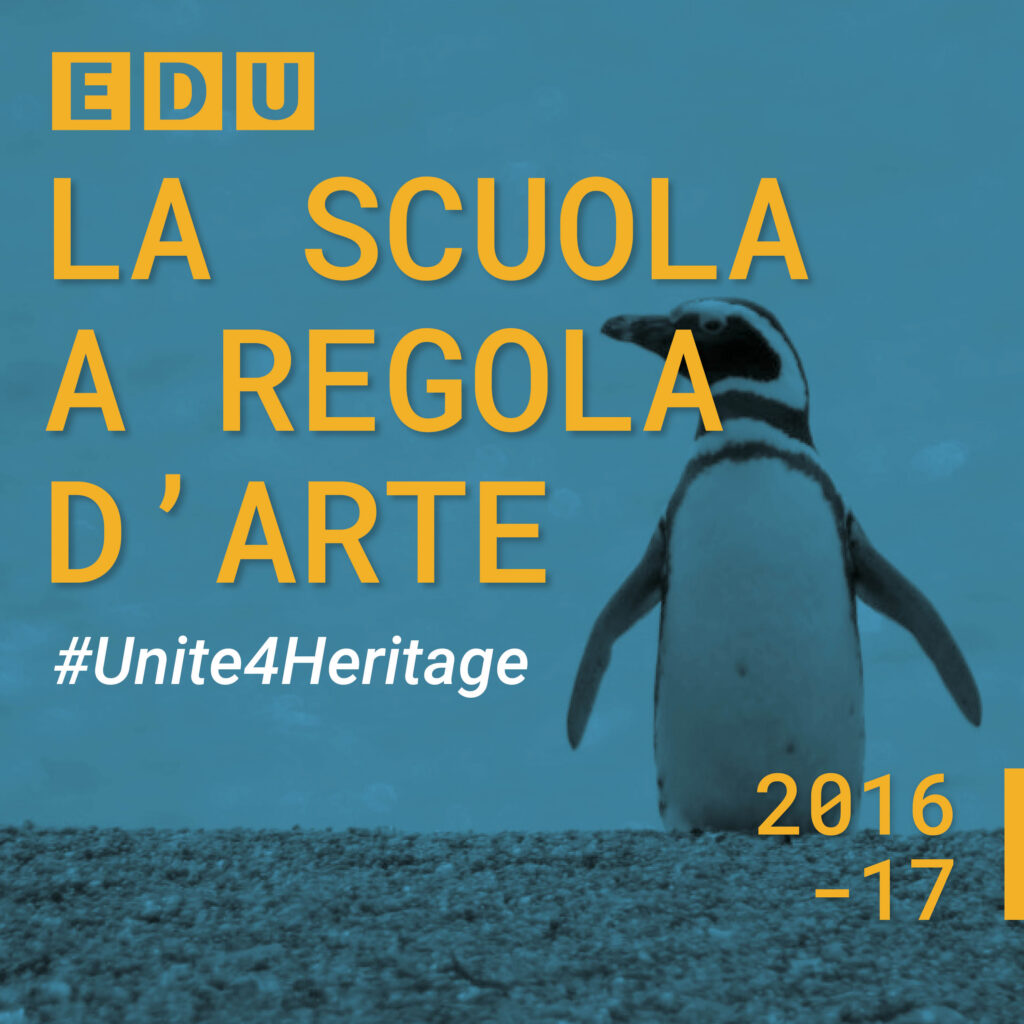
State-of-the-Art School
The first edition of EDU saw the participation of over 2,000 students and involved more than 60 educational institutions—a project that reached 44 cities and 13 UNESCO World Heritage sites, providing over 2,400 workshop hours and bringing together 77 public entities and 55 private companies.
The completed projects were linked to #UNITE4HERITAGE, a campaign launched by UNESCO in 2015 and relaunched in Italy by AIGU in 2016, created in response to the destruction of cultural heritage by extremist terrorist groups.
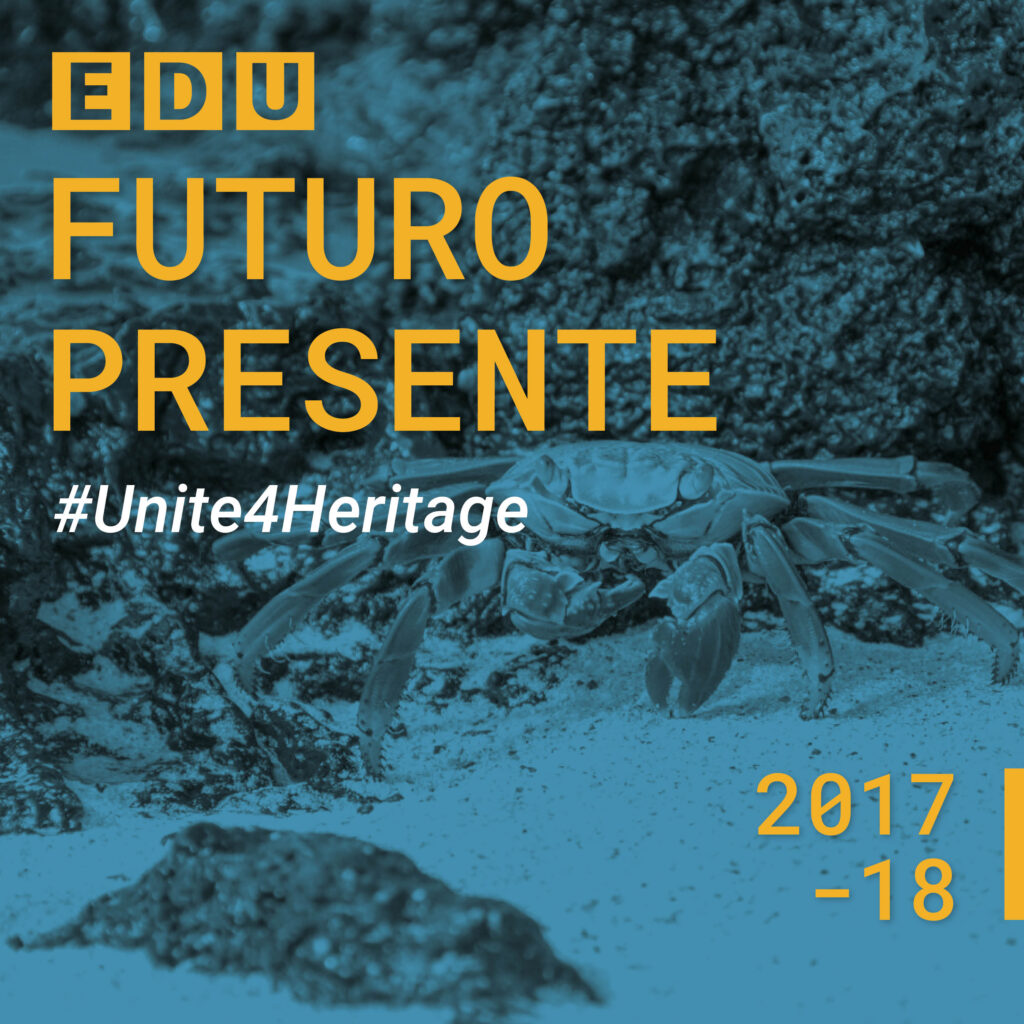
Present Future
The project focused on the heritage of the future—the heritage that young generations are building in the present, which will become their legacy for future generations and contribute to shaping the citizens and the world of tomorrow.
To this end, it aims to promote a broad reflection on new forms of art and expression, as well as on what young generations perceive as the heritage of today and tomorrow. From painting to street art, from photo exhibitions to digital image galleries, from literature to social media posts and tweets, from architecture to video game set designs or 3D modeling, from sculpture to digital fabrication, all the way to eco-sustainable technologies.
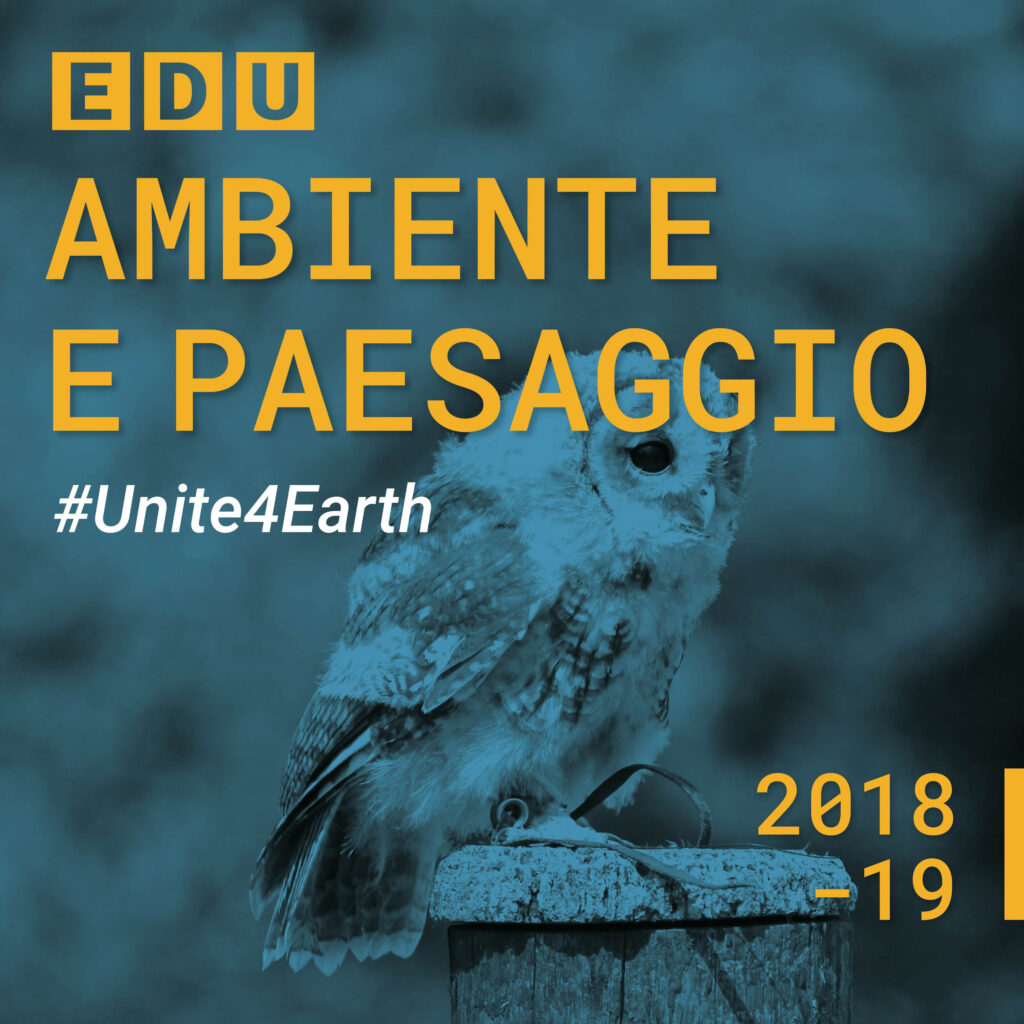
Environment and Landscape
Promoting a culture of responsibility and participation in environmental issues starting from the youngest generations, in line with the action plan of the 2030 Agenda for Sustainable Development.
The EDU Program concluded in all Regions on World Environment Day, June 5, 2019.
The completed projects were linked to #UNITE4EARTH, a campaign launched by AIGU to raise awareness among young generations about the need to mobilize together so that world governments do what is necessary to save our land and our seas.
Sustainable Development
“EDU Sustainable Development,” which received the valuable support of the Bank of Italy and the Presidency of the Council of Ministers, places the 2030 Agenda for Sustainable Development (UN, 2015) at its core. The 17 Sustainable Development Goals (SDGs) outline humanity’s major development challenges to ensure a sustainable, peaceful, prosperous, and equitable life on Earth for everyone, in the present and in the future.
The project aims to expand knowledge and experience regarding the sustainable development opportunities offered by the local territories where the students come from, by establishing new connections between schools, institutions, and innovative business entities.
I Will “Faro” Culture
Dedicated to Heritage with reference to the Faro Convention (2005)—a framework document of the Council of Europe—the aim was to highlight the dimension of heritage (tangible and intangible) that generates well-being and new energy for an inclusive and sustainable society. Following the path laid out by the United Nations 2030 Agenda, important aspects of cultural heritage were emphasized in relation to human rights, democracy, and sustainability.
Approximately 700 students, 60 teachers, and 50 partners (both private and public) were involved. Additionally, provision was made for monitoring the activities and their impacts.
Re-Generation
Ri-Generazione is based on a triangle of three fundamental values, staying aligned with the goals of the 2030 Agenda—and with the ministerial program “Rigenerazione Scuola” (2022)—as well as the aims of the “Faro Convention” on well-being and heritage.
These three inseparable values were drawn from the European action plan to achieve the Green Deal, the New European Bauhaus: the value of sustainability, in regenerative processes and in actions useful for achieving the goals of the 2030 Agenda; the value of aesthetic quality, pursued in line with functional forms as well as in empowerment experiences involving the transfer of knowledge and skills to students; and the value of inclusion, promoting diversity, equality for all, accessibility to spaces, and affordability.
Heritage and Climate Change
For the 2023–24 school year, the EDU project will be dedicated to the impact of the climate crisis on cultural, landscape, and environmental heritage.
Indeed, we aim to educate younger generations on the priority attention given by UNESCO to this pressing issue, which was already present in the Convention Concerning the Protection of the World Cultural and Natural Heritage (1972), and further highlighted in 2006 by the report “Predicting and Managing the Effects of Climate Change on World Heritage” and by the Policy Document on the Impacts of Climate Change on World Heritage Properties, recently updated in view of new goals to be achieved by 2030.
Heritage and Digital Innovation
For the 2024–2025 school year, EDU places the relationship between digital innovation and cultural, landscape, and environmental heritage at the center of its workshops. As early as 2003, UNESCO identified Digital Heritage as a common heritage by adopting the Charter on the Preservation of Digital Heritage; then in 2021, through the Medium-Term Strategy 2022–29 approved during the 41st UNESCO General Conference, member states identified key strategic objectives including the “promotion of learning in the digital age,” “environmental protection through the promotion of technology,” and “the dissemination of knowledge and skills for ethical technology in the service of humanity.”
Thanks to technological innovation, we have the tools to expand access to tangible and intangible cultural heritage—not only guaranteeing its preservation, but also driving a genuine educational vanguard that harnesses the potential of digital technology to contribute to quality, inclusive, and equitable education.
Heritage and Gender Equality
For the 2025–2026 school year, the EDU project addresses the theme of gender equality in heritage enhancement education and sustainable citizenship. Central to the programming is the UNESCO Strategy for Gender Equality in and through Education 2019–2025, a document highlighting the centrality of accurate global information on gender equality and the necessity of equitable access to education to ensure everyone—regardless of gender, age, ethnicity, health status, ability, geographic origin, or sexual orientation—full access to quality education to exercise their right to active and informed citizenship.
Memory of the World
The 2026–2027 school year is dedicated to the UNESCO Memory of the World Programme and to the promotion of documentary memory as a heritage of humanity. Memory represents and constitutes the starting point of this journey; without evidence and documentary heritage, a truly conscious and participatory citizenship cannot develop or exist.
The theme is addressed not merely as the preservation of the past, but as a living exercise of responsibility toward the present and future generations. Safeguarding memory means countering oblivion, misinformation, the loss of sources, and the fragility of cultural transmission processes. As Italo Calvino’s reflections suggest, memory is not merely the preservation of what has been, but a tool for understanding the present and imagining the future: a living heritage to be questioned, shared, and passed on to new generations.

EDU talks is the closing event of the EDU workshops, held every year at the end of the school year. The aim of the event is to present the outputs produced by the students, with an exhibition of the projects and themed talks. Students are the true protagonists of this event, called upon to share their EDU experiences and to engage in direct dialogue with the institutions and young professionals involved. Projects, ideas and best practices are at the heart of the debate, providing useful advice for the new generations, the citizens of tomorrow.


