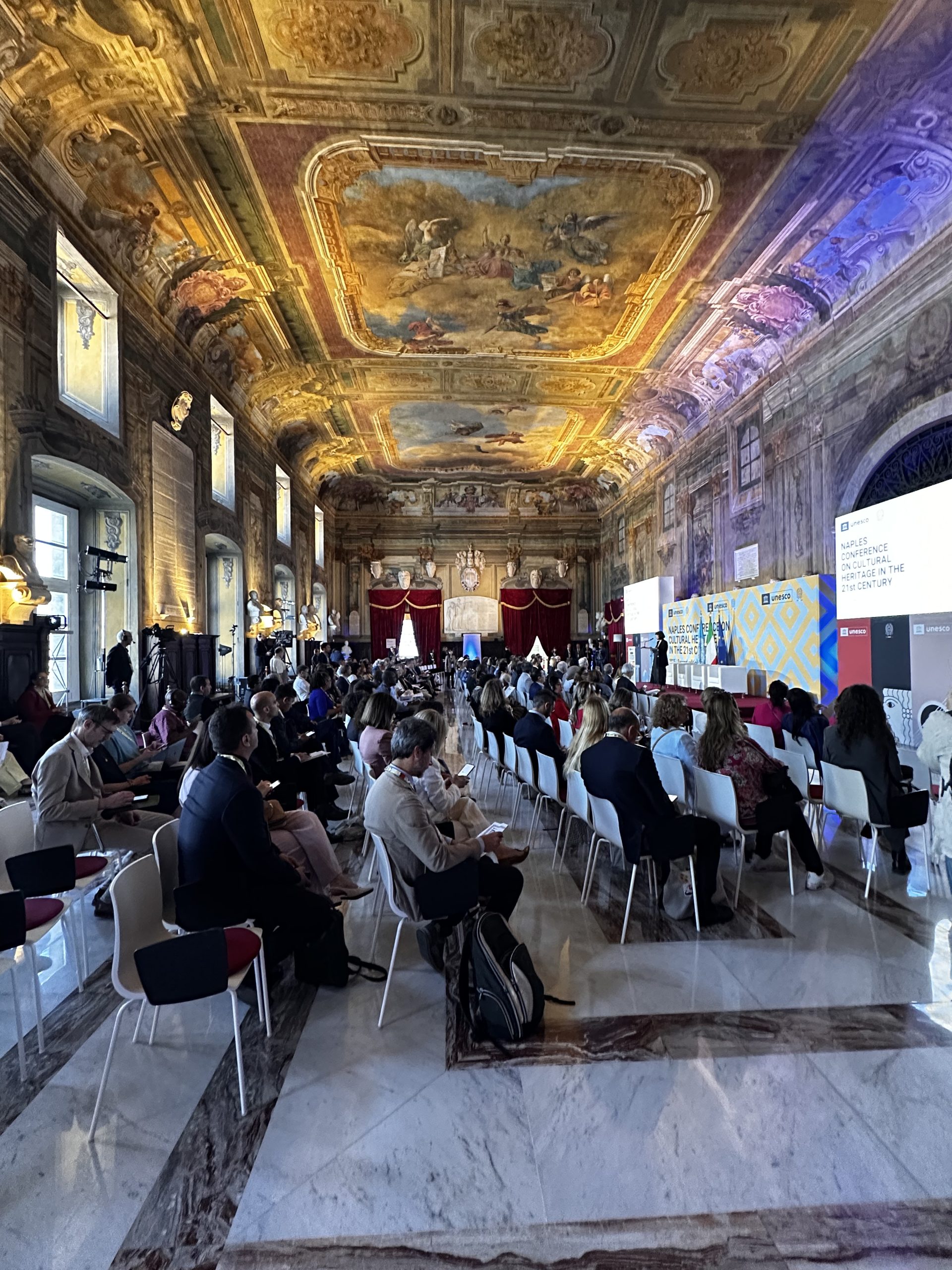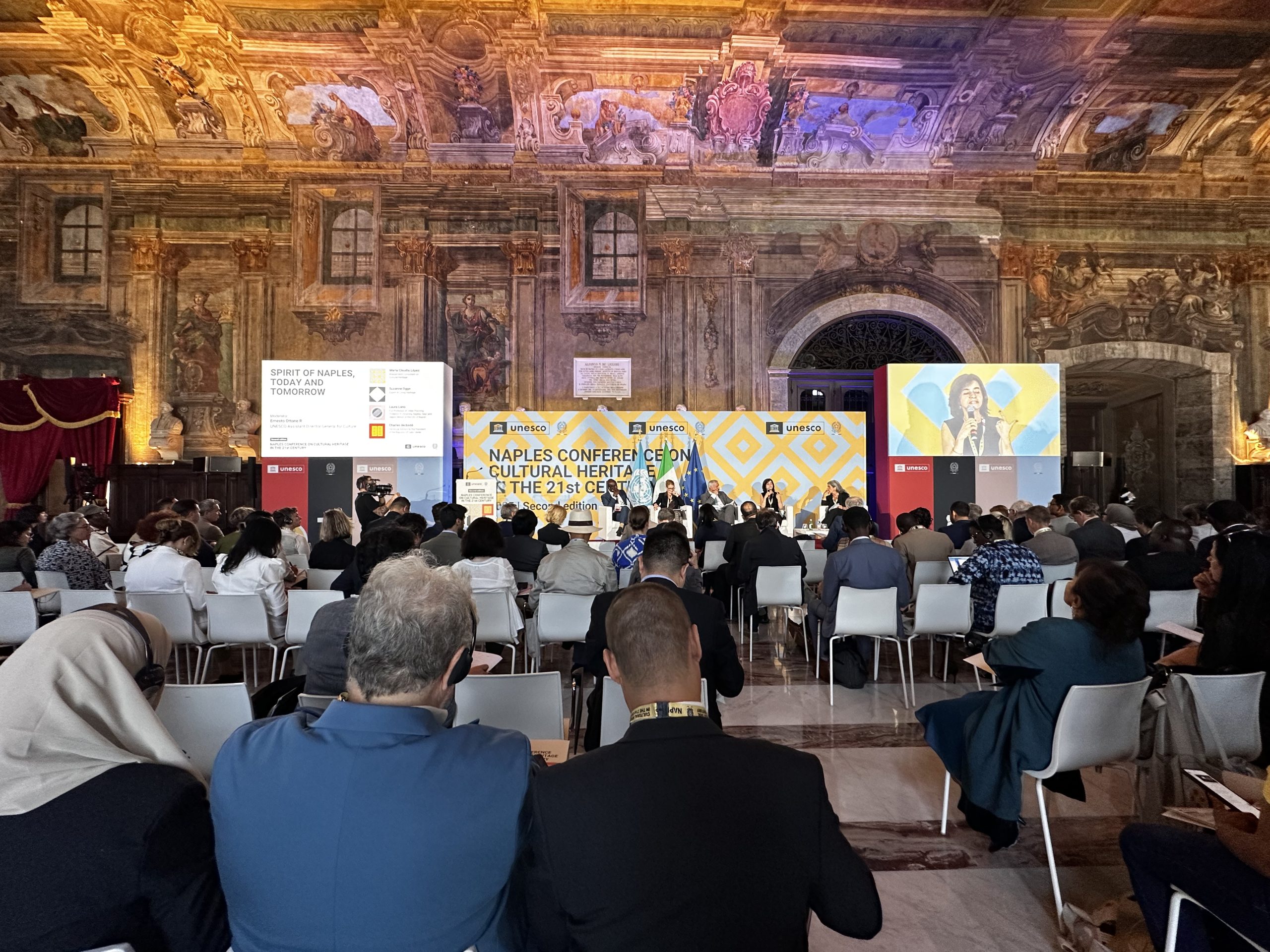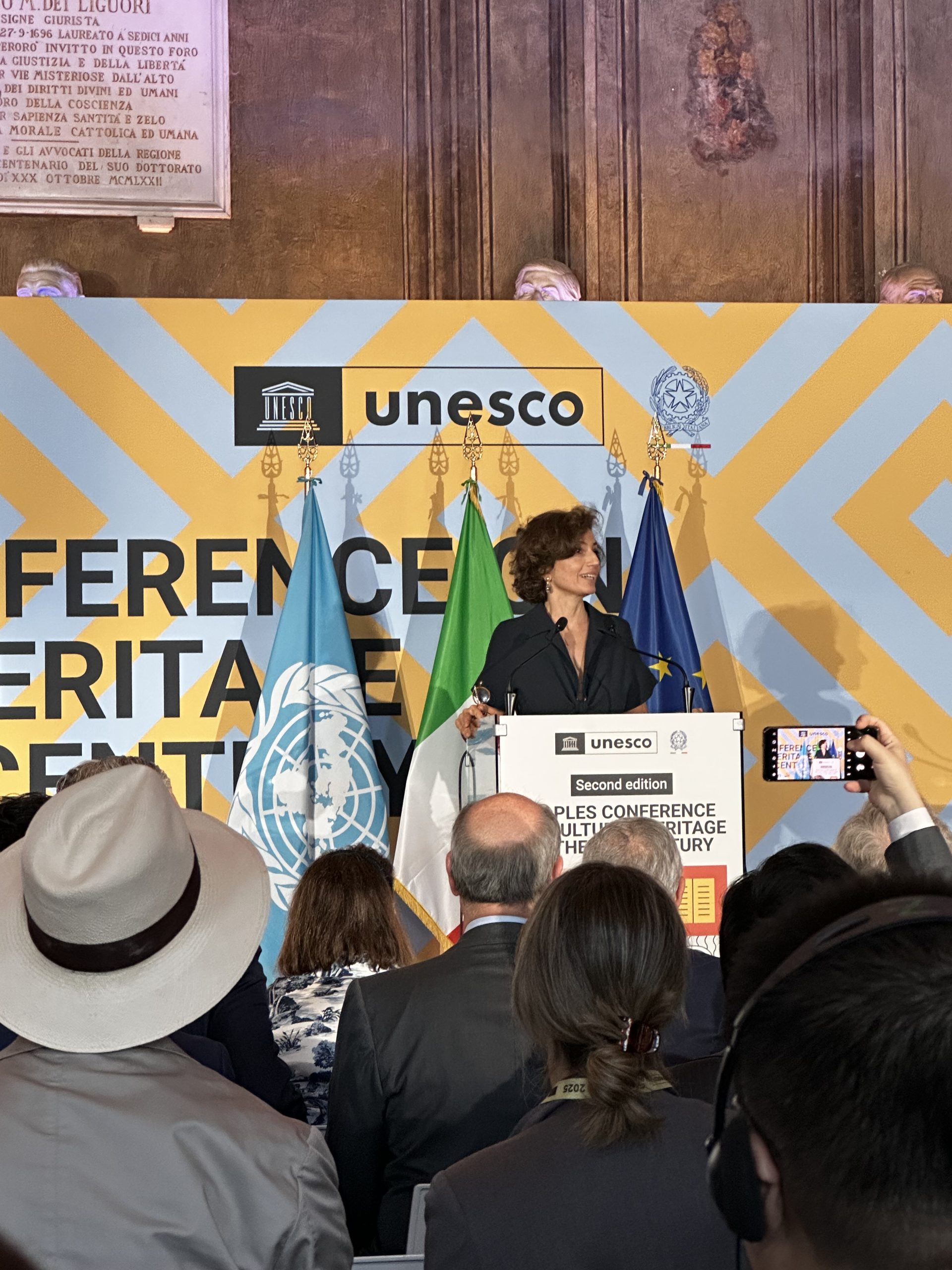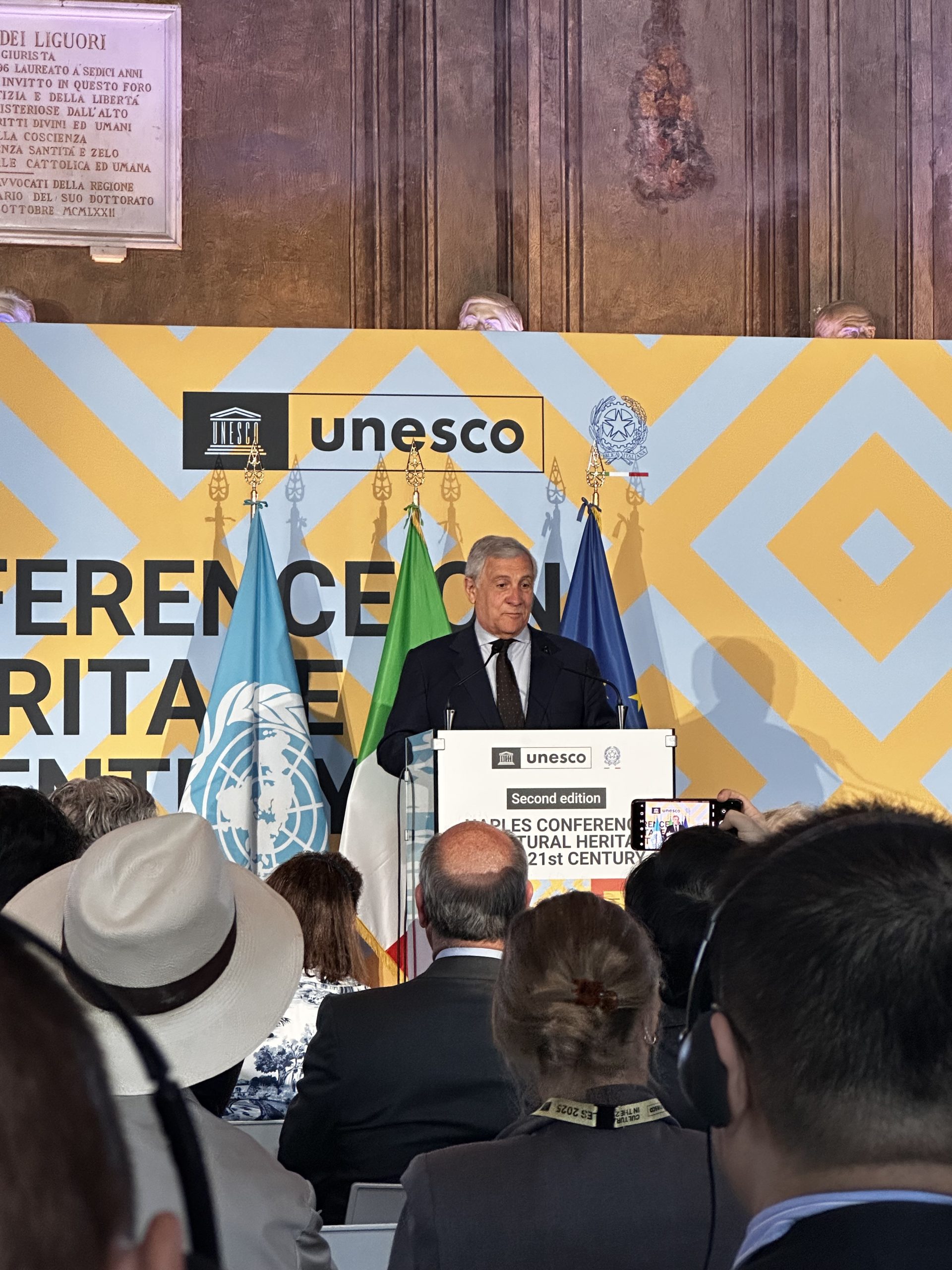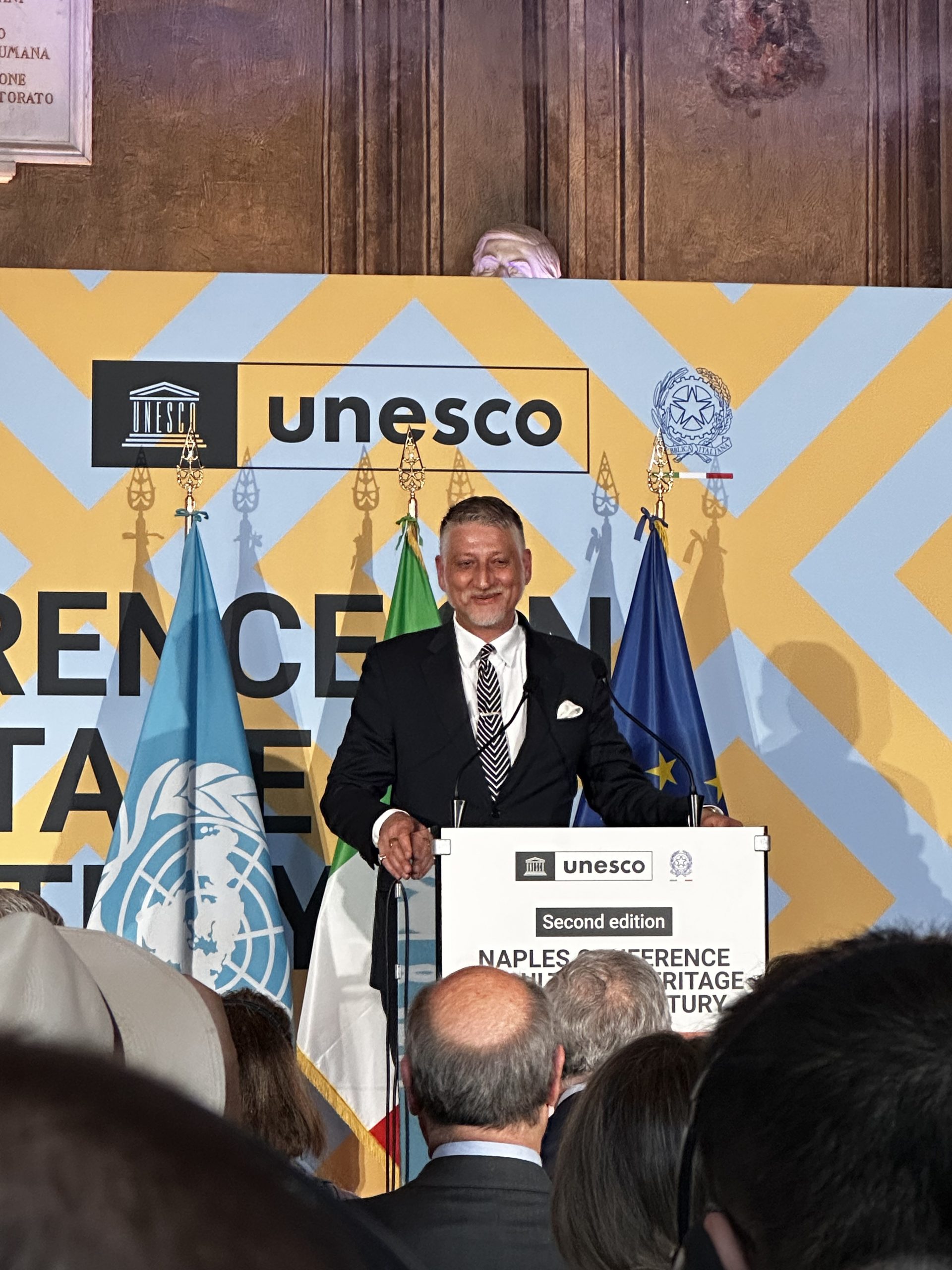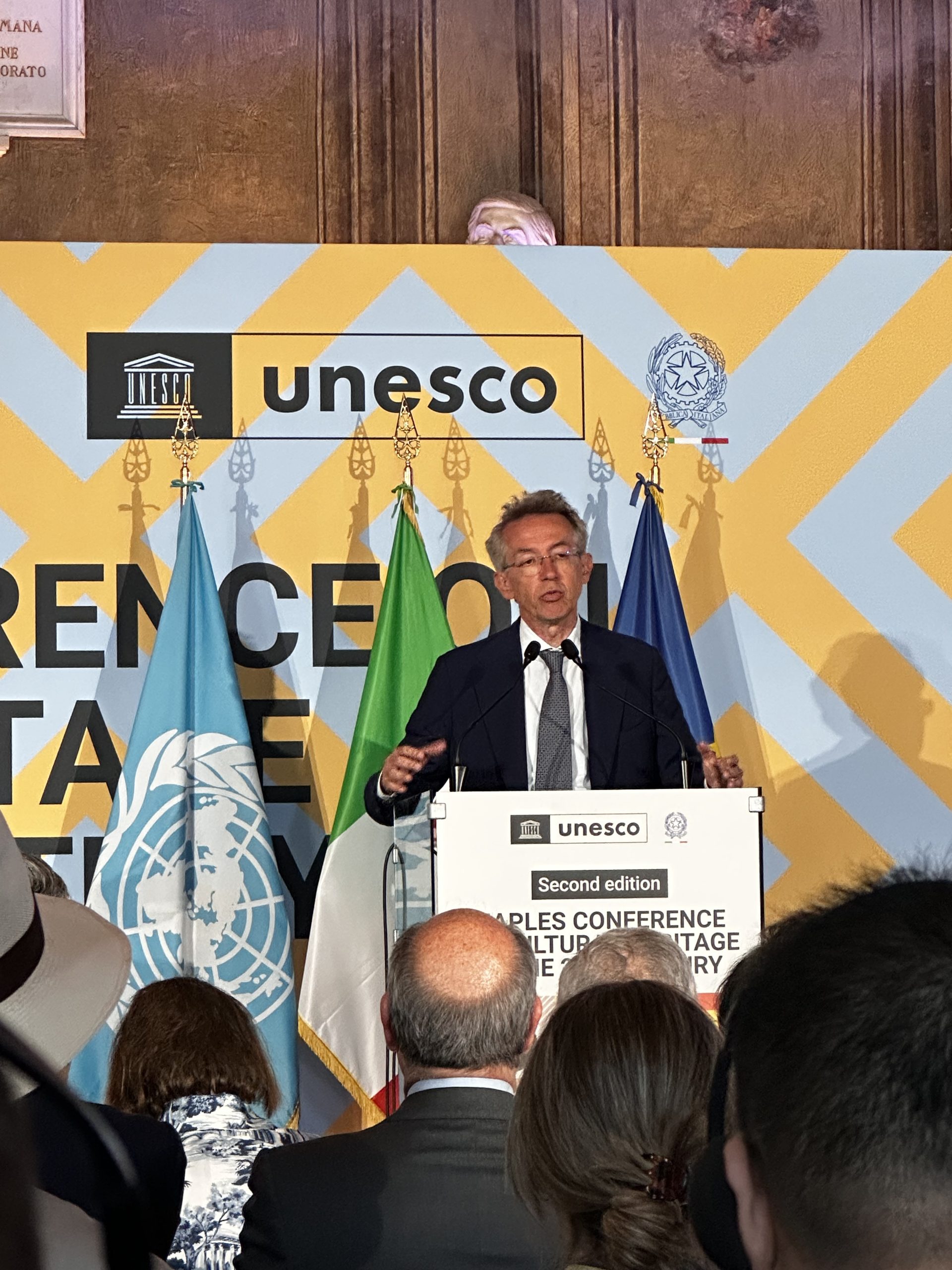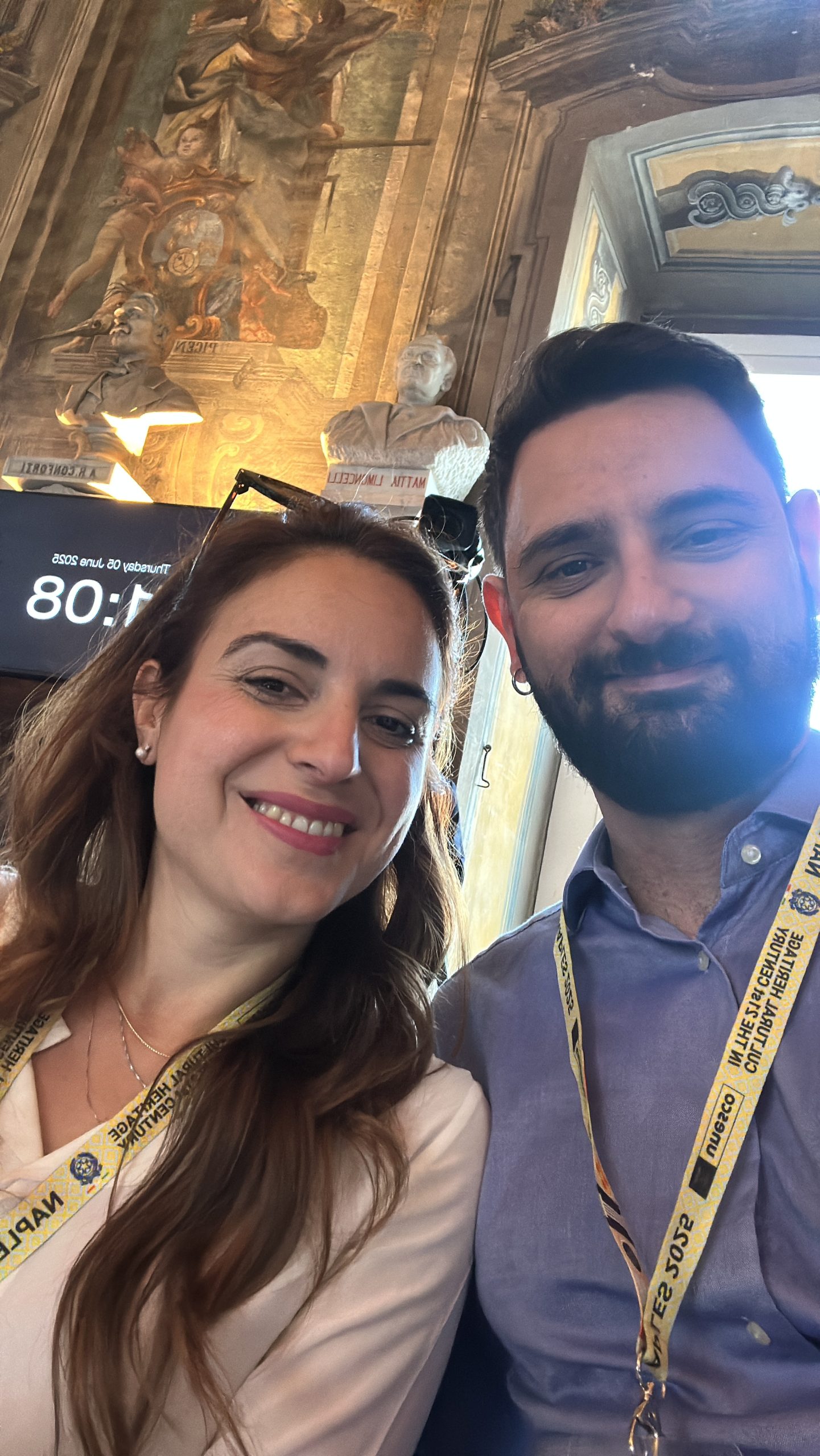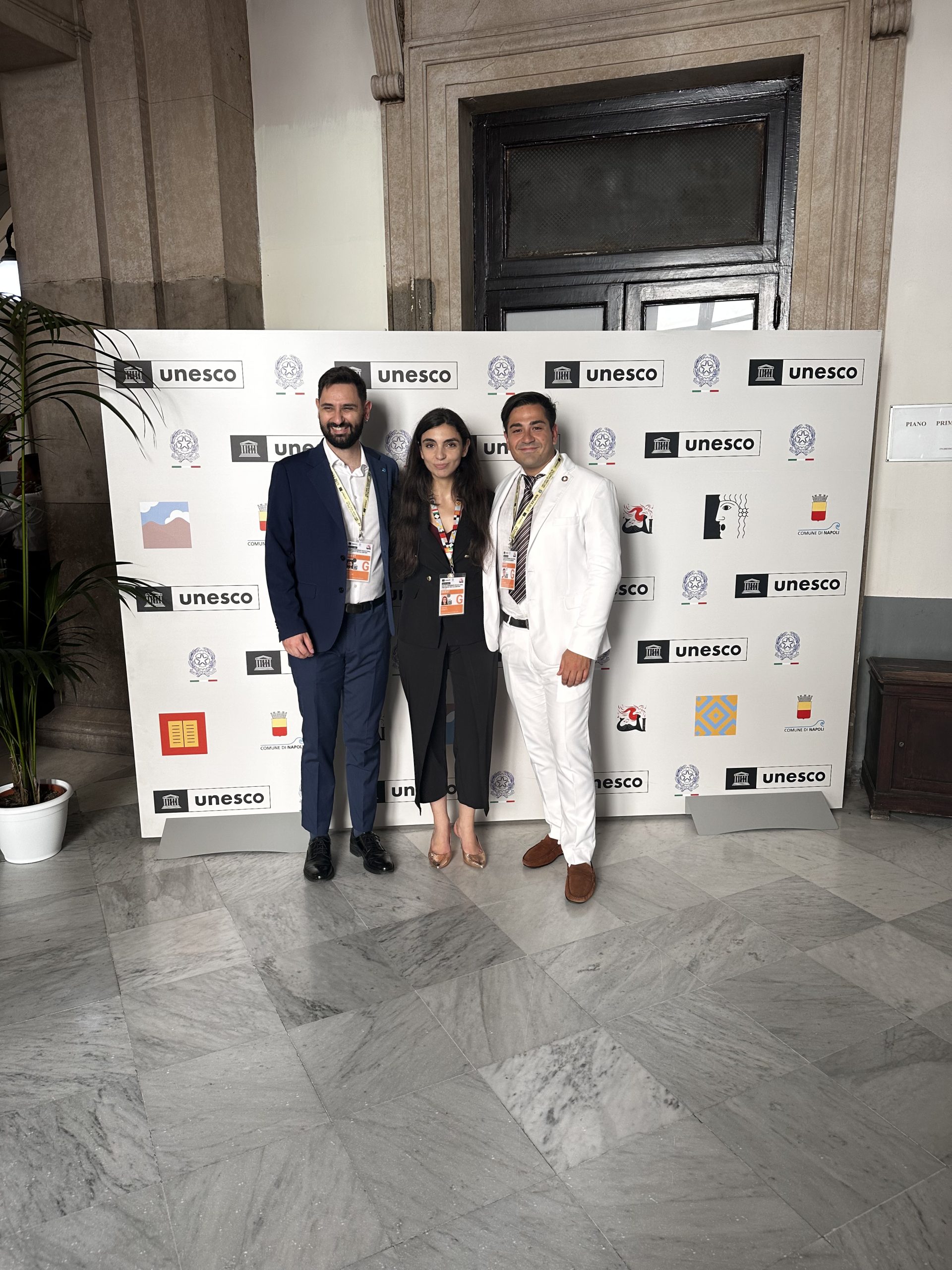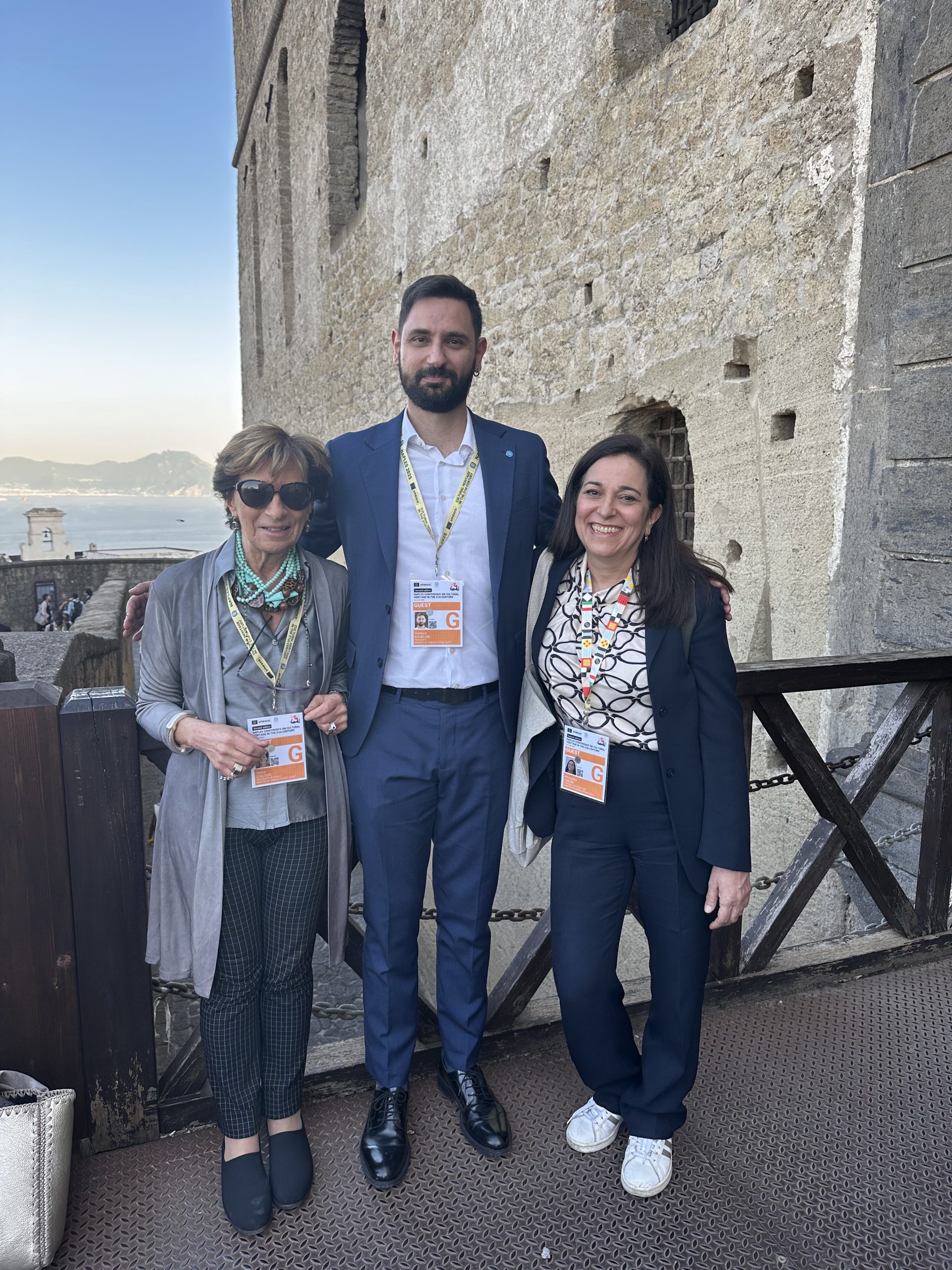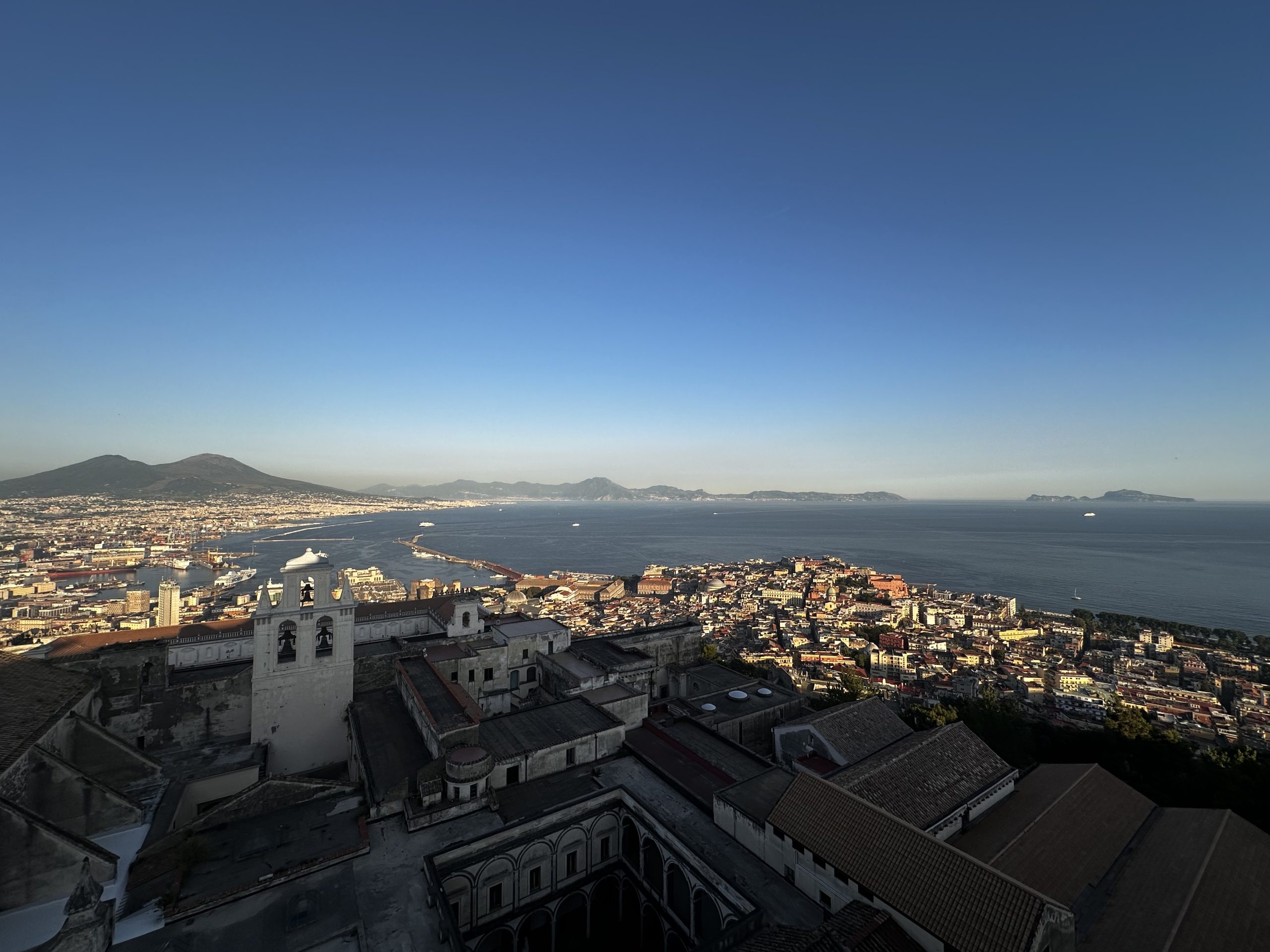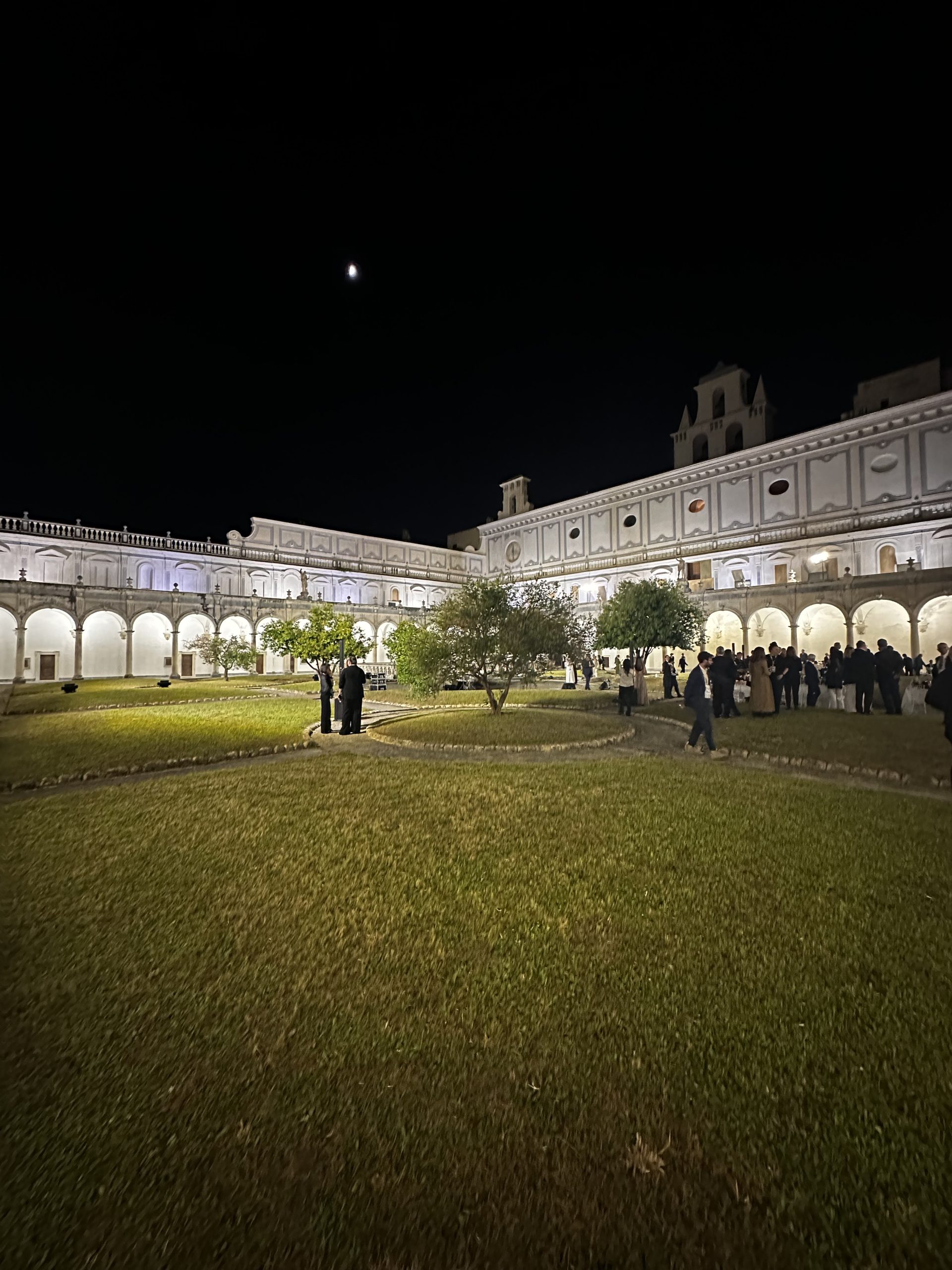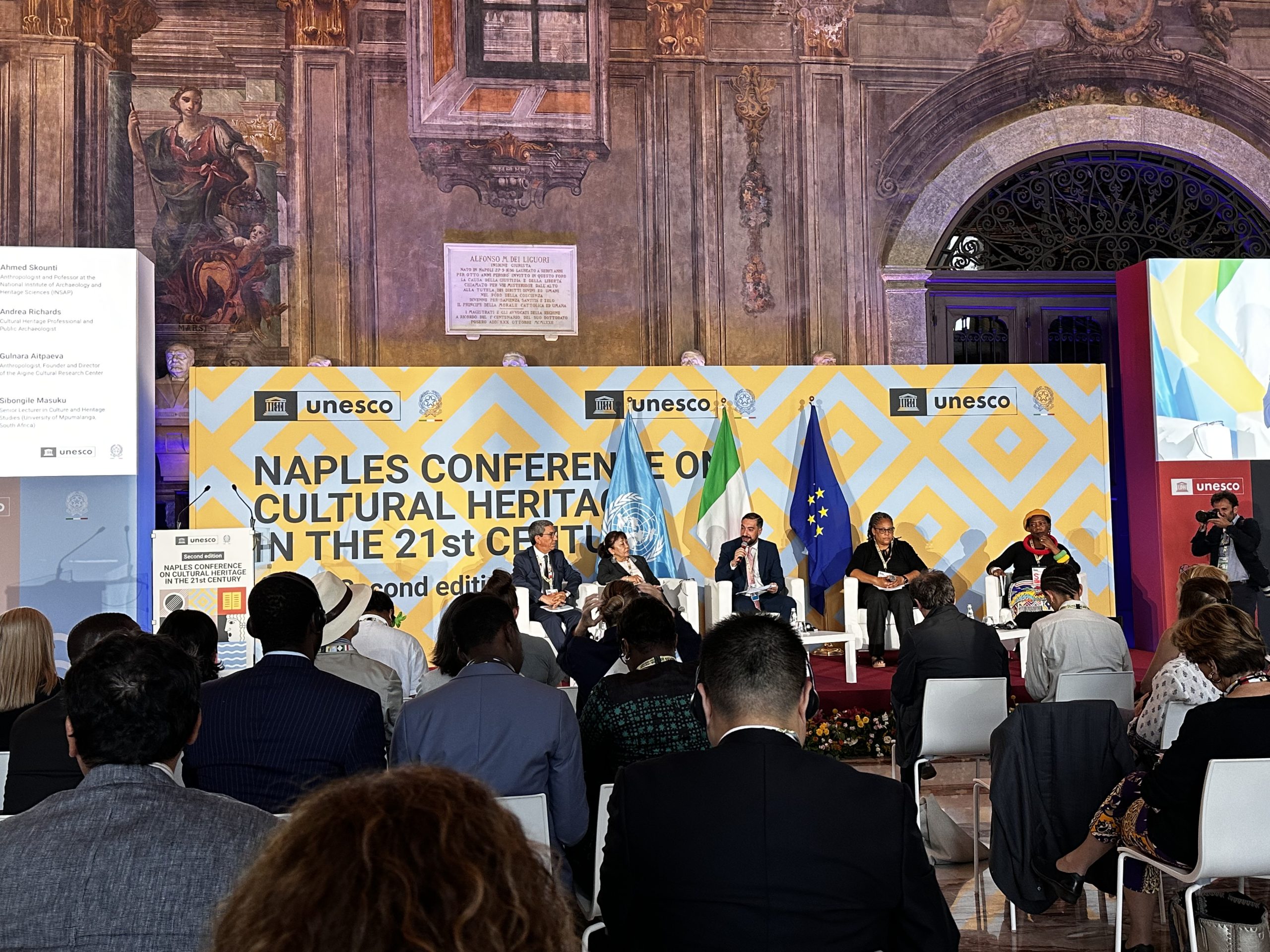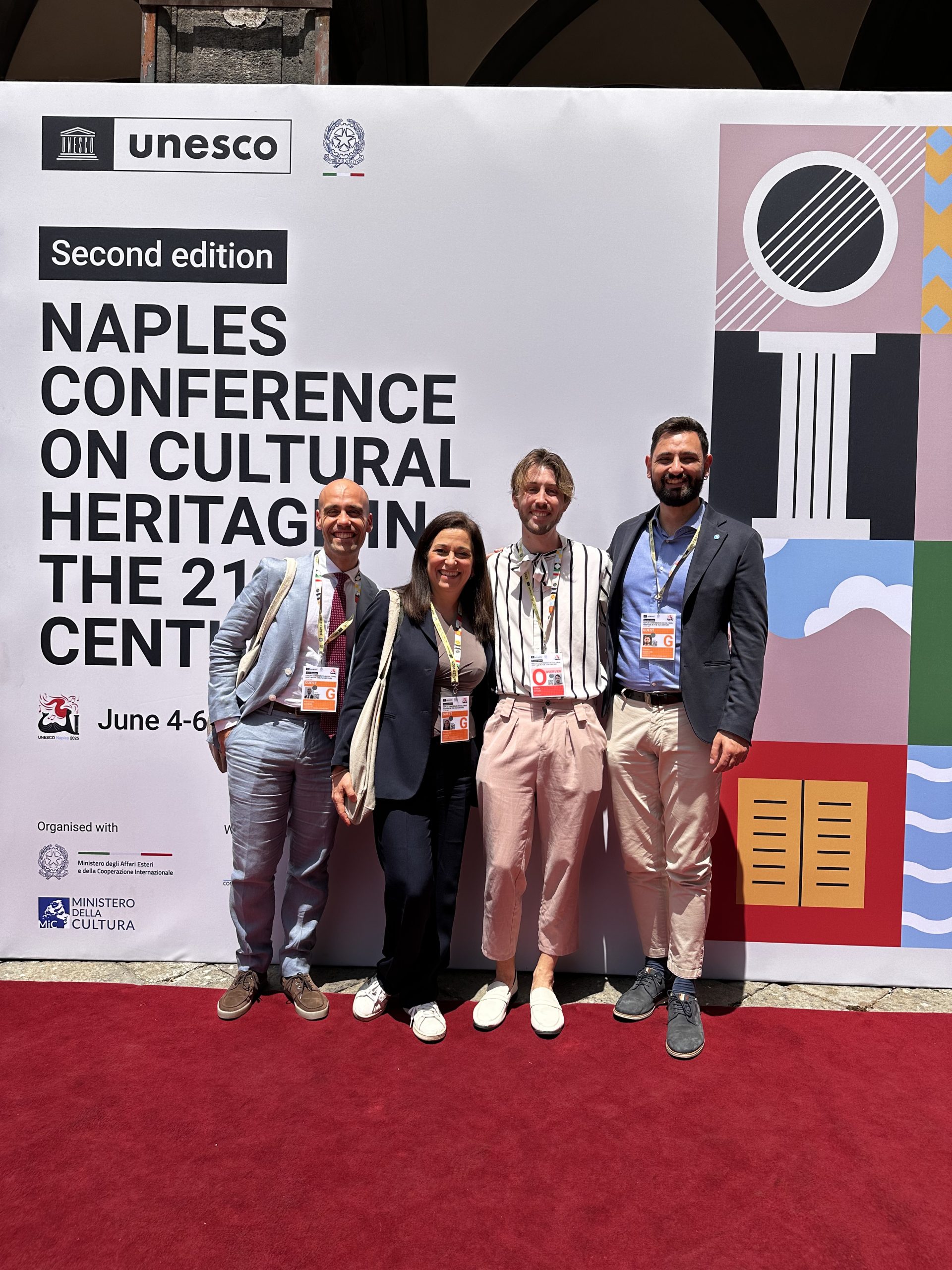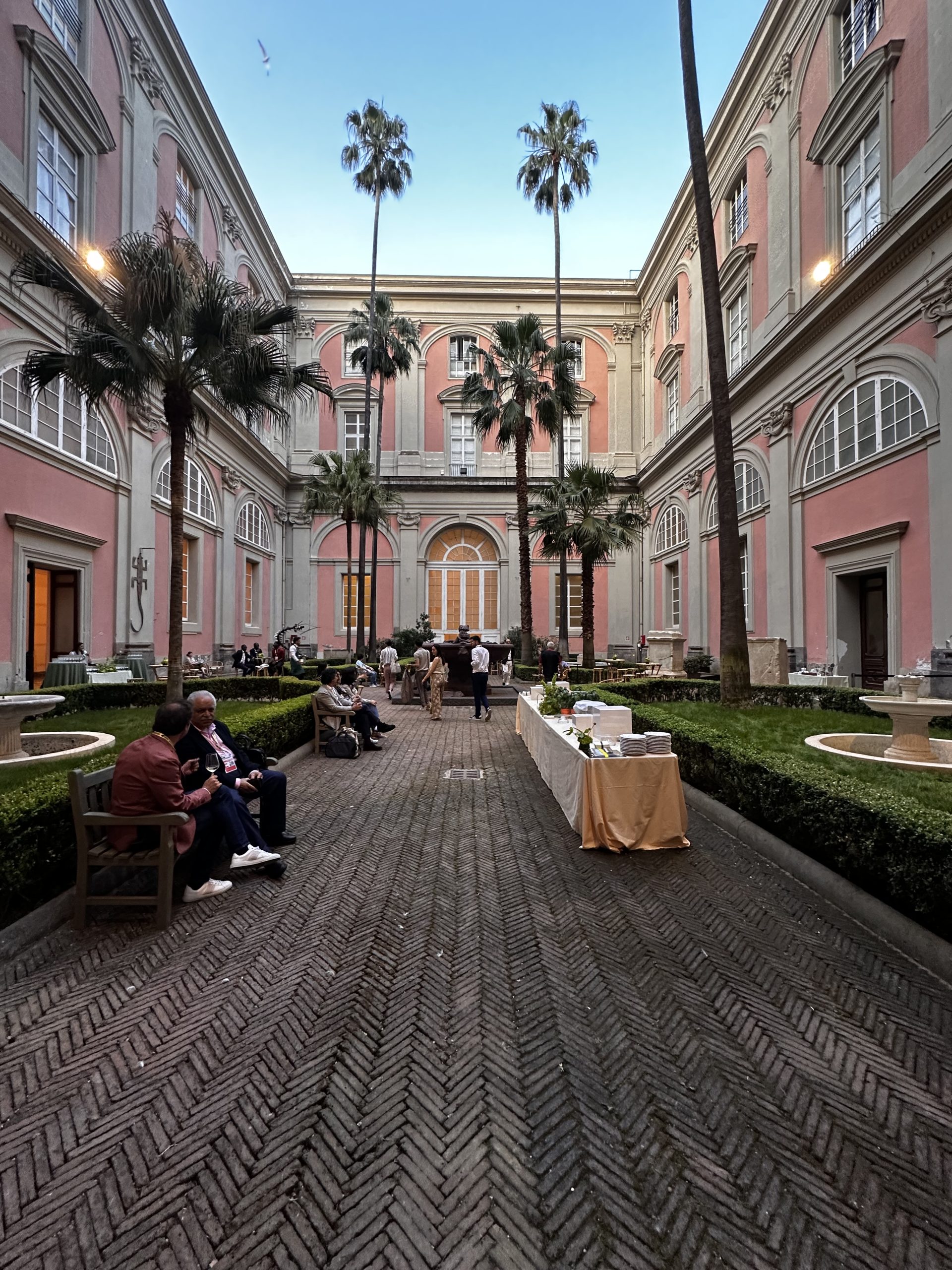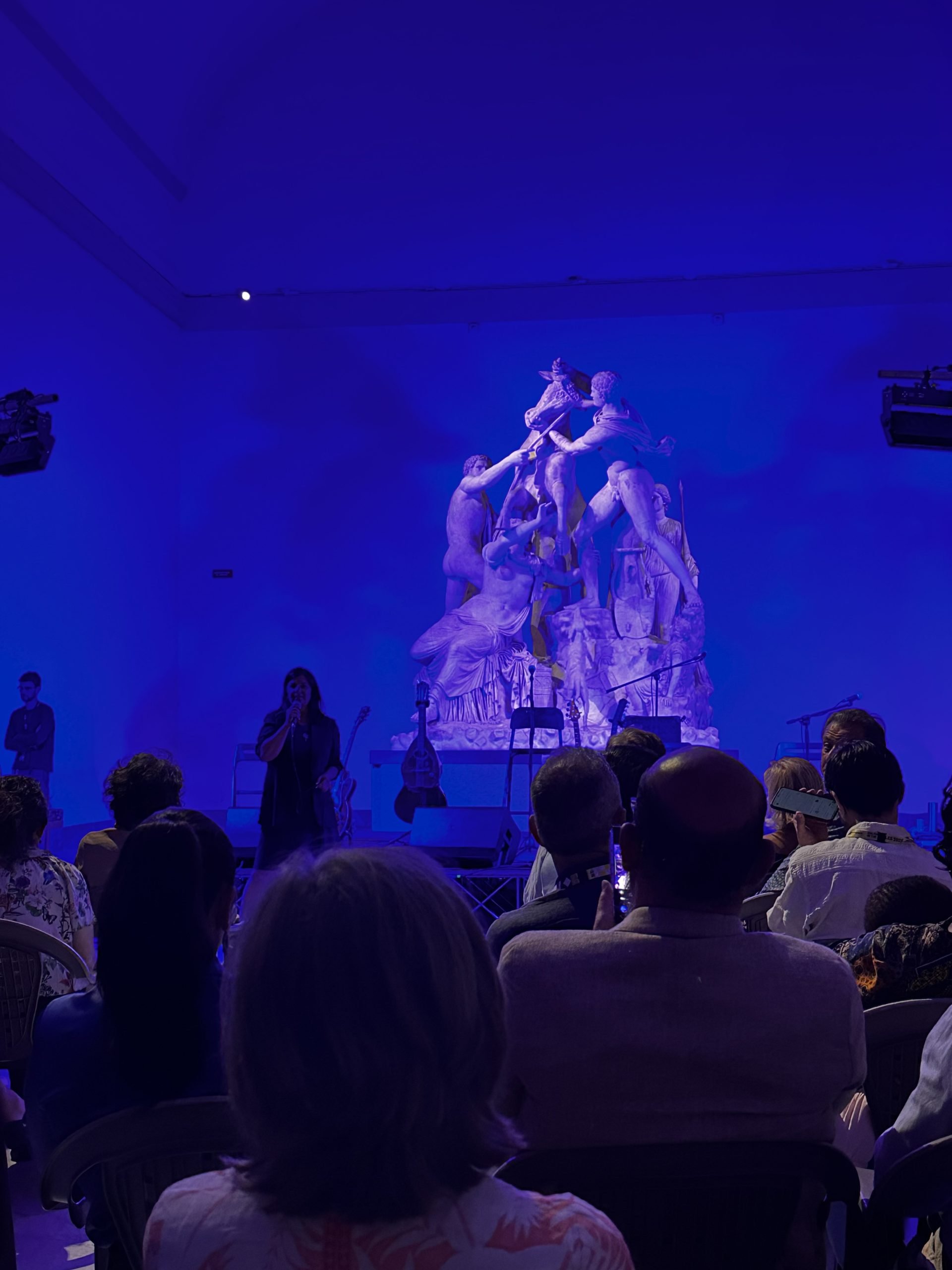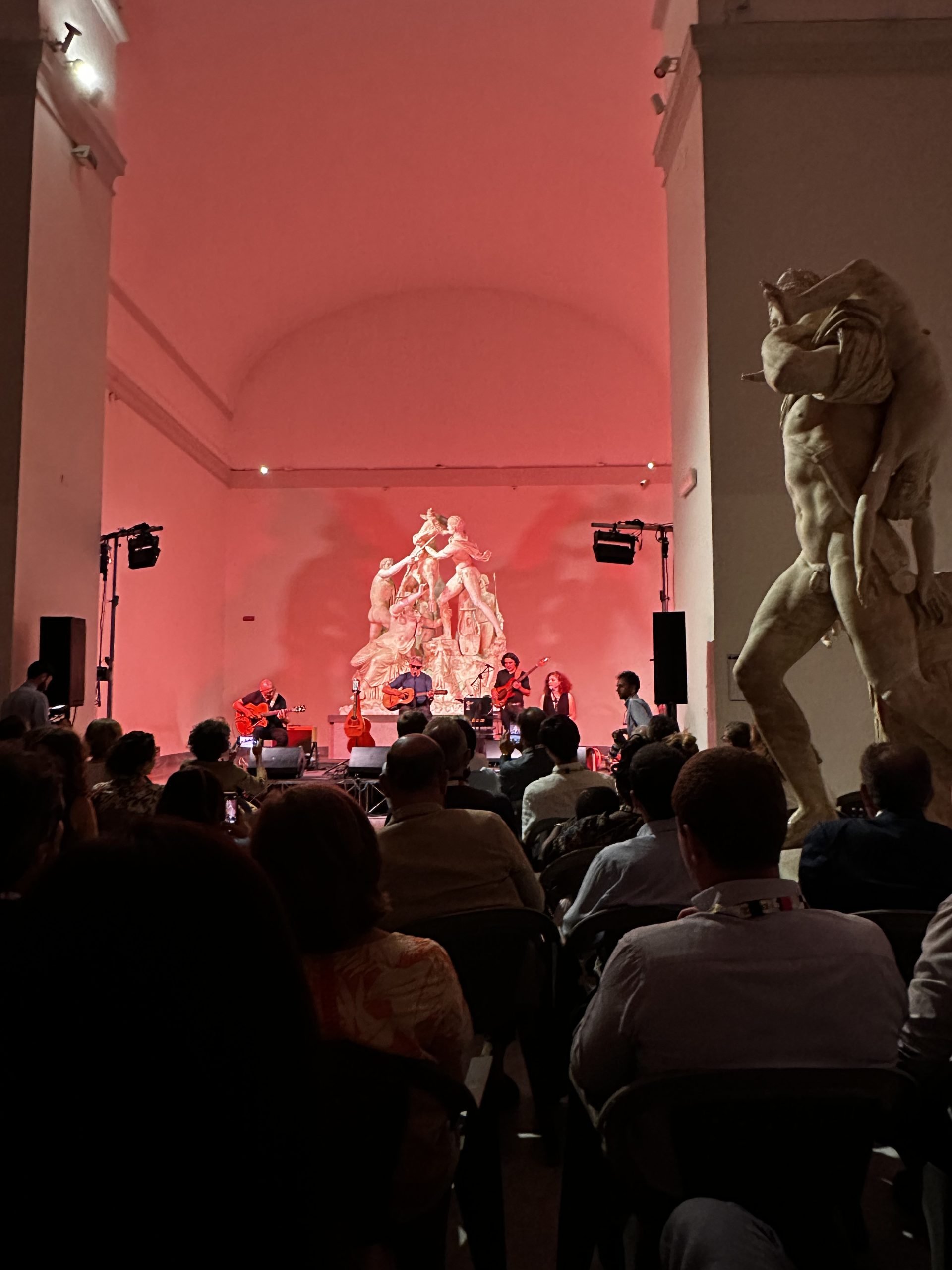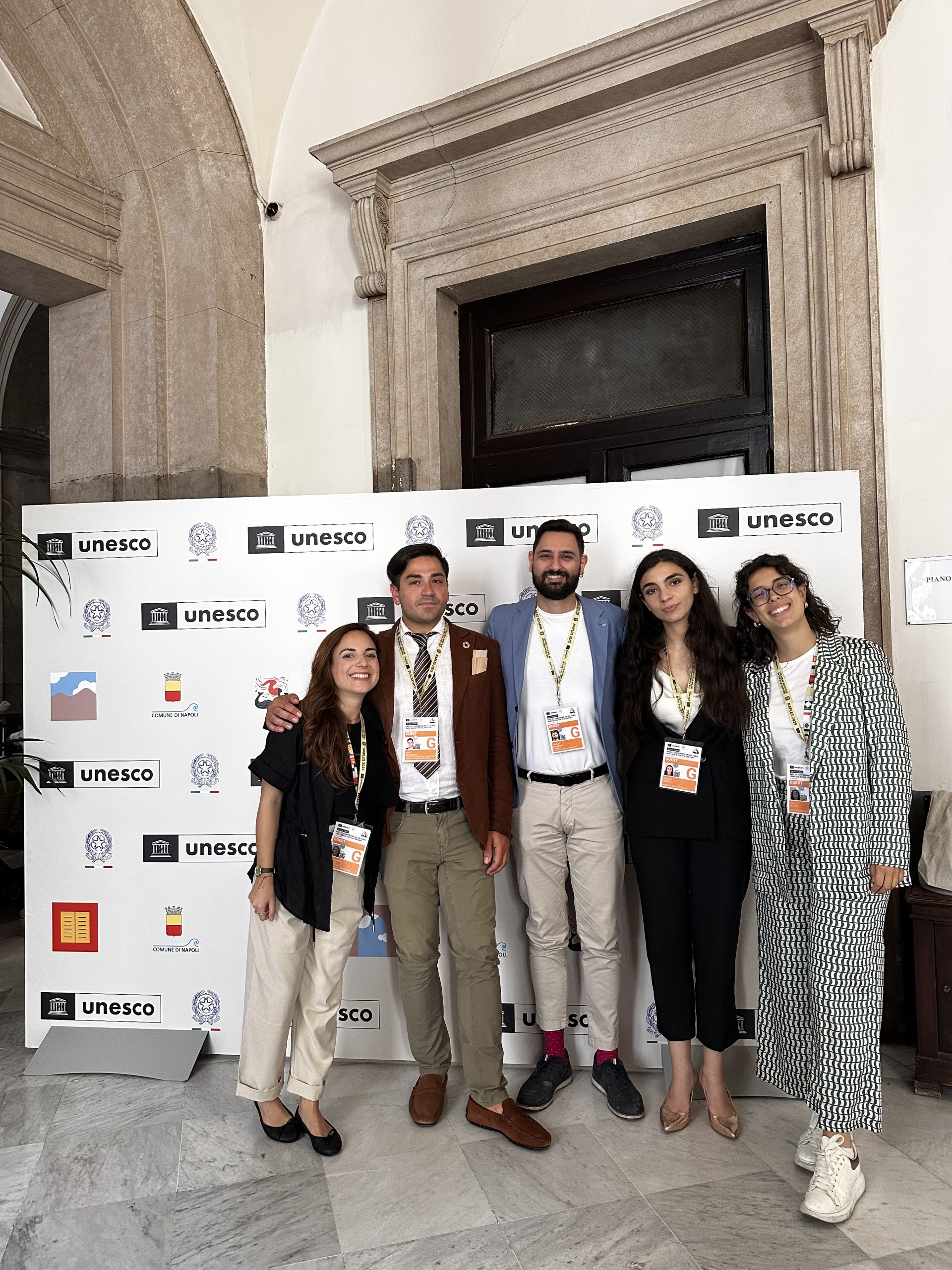
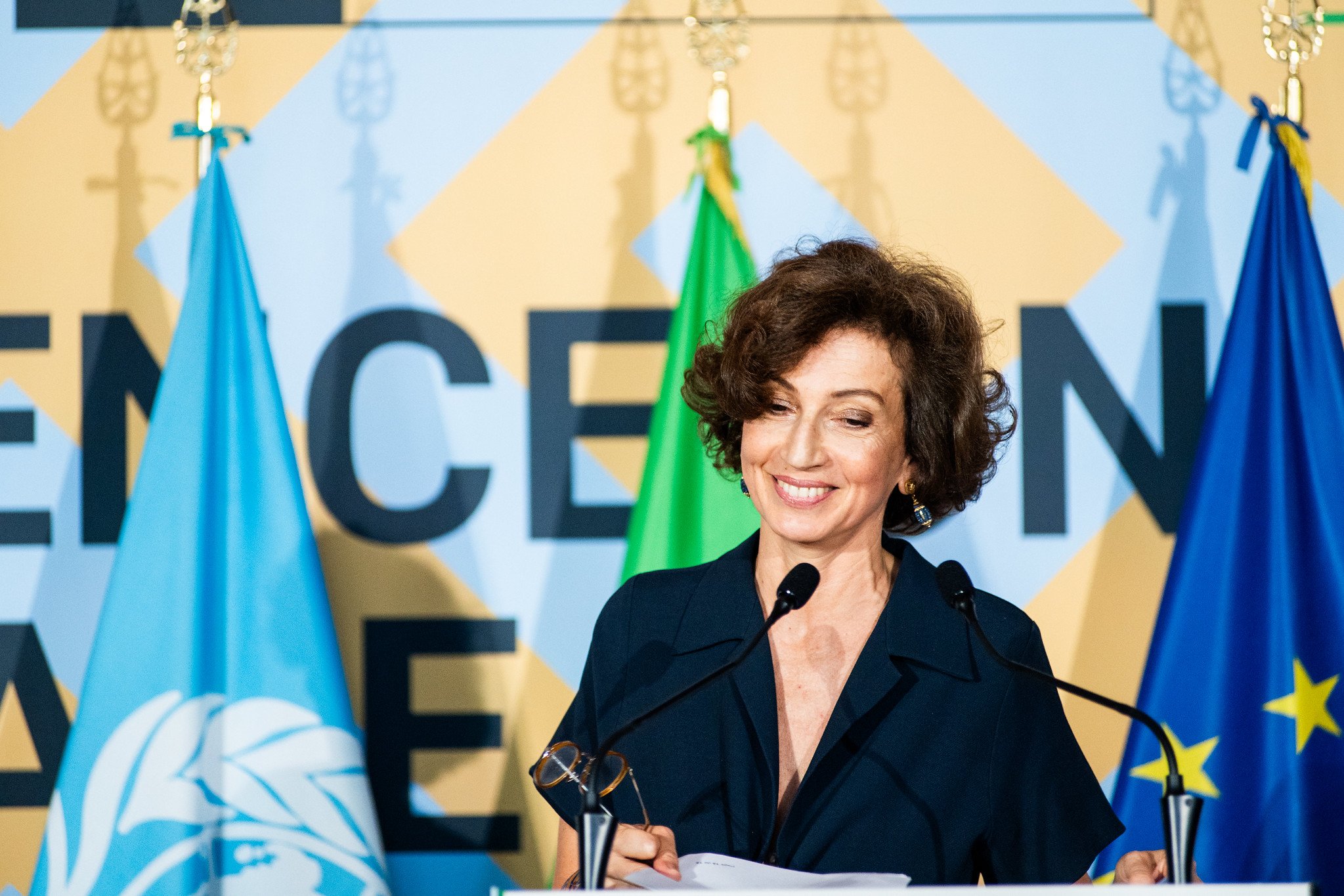
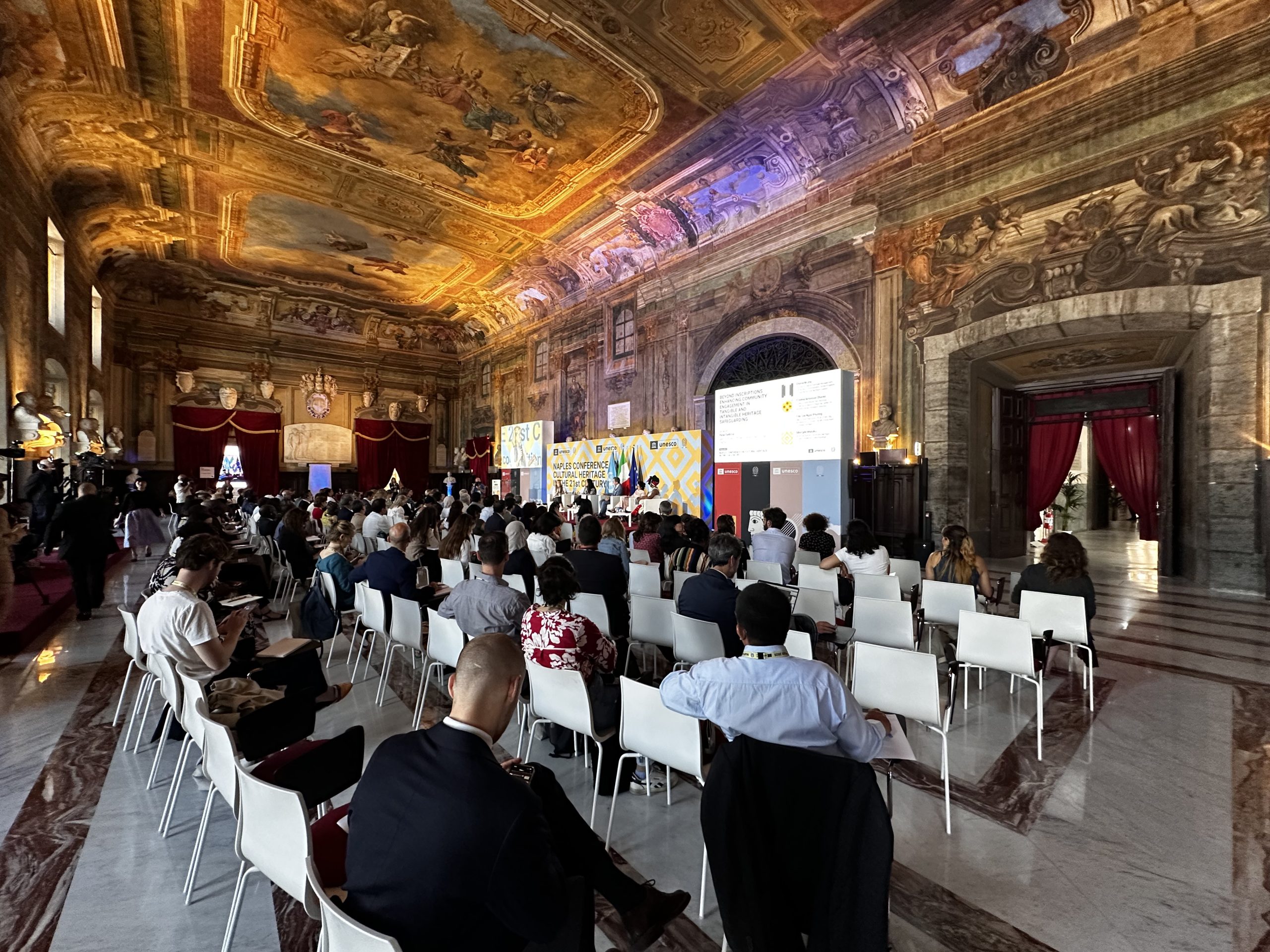
From 4 to 6 June 2025, Naples hosted the second edition of the UNESCO Conference on Heritage in the 21st Century, dedicated to UNESCO Heritage – World and Intangible, tangible and intangible – in our times, with contributions from experts from all over the world and in the presence of representatives of UNESCO and international institutions. As highlighted by UNESCO Director-General Audrey Azoulay in her opening speech, the Conference explored the properties and characteristics of the concept of heritage today through concrete examples illustrating current challenges, against the backdrop of a city like Naples – not only an exceptional example of the coexistence of monumental sites and a living, distinctive community, but also, as recalled by the Minister of Culture Alessandro Giuli, a millennia-old expression of a spirit of openness, hospitality and peaceful coexistence between men, women and distant cultures.
The first Conference on Heritage had also taken place in Naples, in 2023, launching a final Call to Action that highlighted the priorities concerning UNESCO Heritage in our century, and in particular:
- the safeguarding of both Heritages, World and Intangible, through a holistic approach (one that seeks to further strengthen the synergies between these types of cultural assets);
- the centrality of the community not only in the process of inscription on the Heritage Lists, but also and above all in the management of the elements once inscribed, in the face of the problems posed by phenomena such as mass tourism and climate change;
- the expansion of the Lists, with the aim of welcoming a greater number of elements from less represented countries, also with the assistance of teams of experts from the countries with the most inscriptions.
All these themes were once again at the centre of the debate in this second edition, updated and enriched with new avenues of analysis. In particular, great emphasis was placed, in order, on the synergies and connections between the two Conventions, on the definition of communities and their role, and on the use of new technologies, such as artificial intelligence.
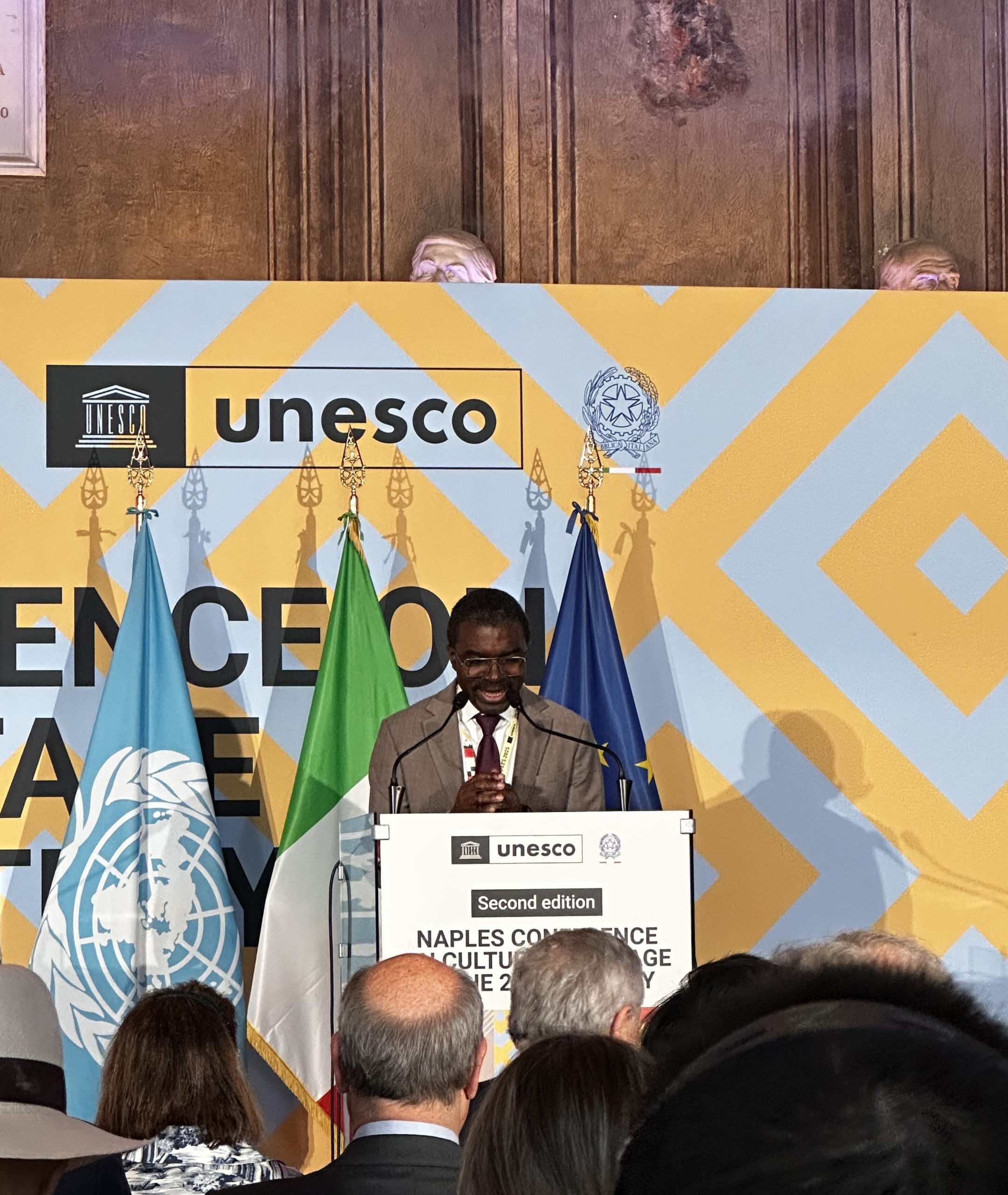
As the Director of the World Heritage Programme, Lazare Eloundou Assomo, pointed out in one of his speeches at the Conference, “interconnection” was one of the key words of all the dialogue sessions: interconnection first and foremost between the two Heritages, which represent the two different but inseparable aspects of the same phenomenon, namely the cultural expression in the broadest sense of the life of a community, whether global (as in the case of World Heritage) or local (as with Intangible Heritage).
The increasingly evident connection between the two Heritages brings to the fore a fundamental factor: the community, which was the other great protagonist of this edition of the Conference. Since as early as 2007 it has earned the honour of featuring as the “fifth C” alongside the other four on which the 1972 Convention is founded (Credibility, Conservation, Capacity-Building and Communication). It is, however, a concept that is difficult to define, and one that was indeed left undefined even in the text of the 2003 Convention for the Safeguarding of the Intangible Cultural Heritage. The Conference participants agreed on the need to try to delineate this notion more clearly. “If we do not know what a community is, how can we truly involve it?” asked an expert from Morocco. At the Conference, moreover, it emerged that the Western idea of community, understood as a group of people bound by a shared cultural system, does not apply perfectly everywhere, especially in the countries of the so-called Global South.
Some of the Conference’s concluding reflections were devoted to technology and its ambivalent role in contemporary society, with particular attention to artificial intelligence. While the importance of this tool for many of UNESCO’s cultural projects is recognised today, it is impossible to ignore the deregulation present in this economic sector, which has led to the development of a billion-dollar business that is neither neutral nor democratic.
“Walking through Naples I realised that this was not just the heritage of Naples or of Italy – it was also my heritage, the heritage of everyone”
Words of community, spoken by the delegate from Tuvalu, of welcome and of peace that well represent the spirit of UNESCO.
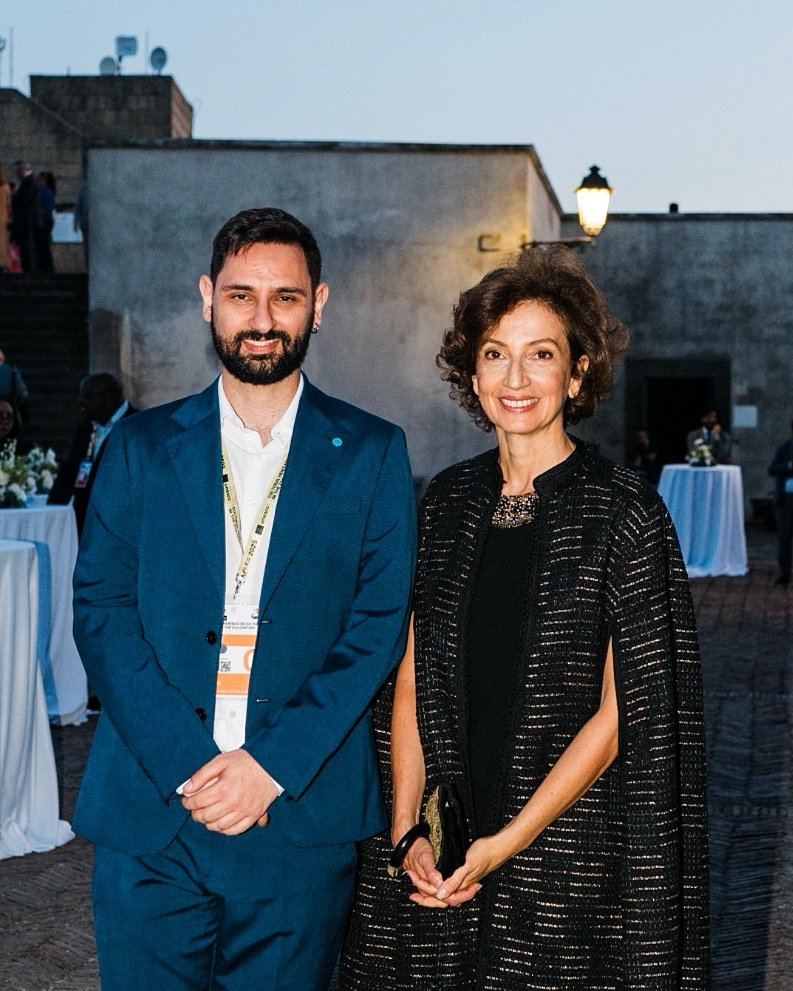
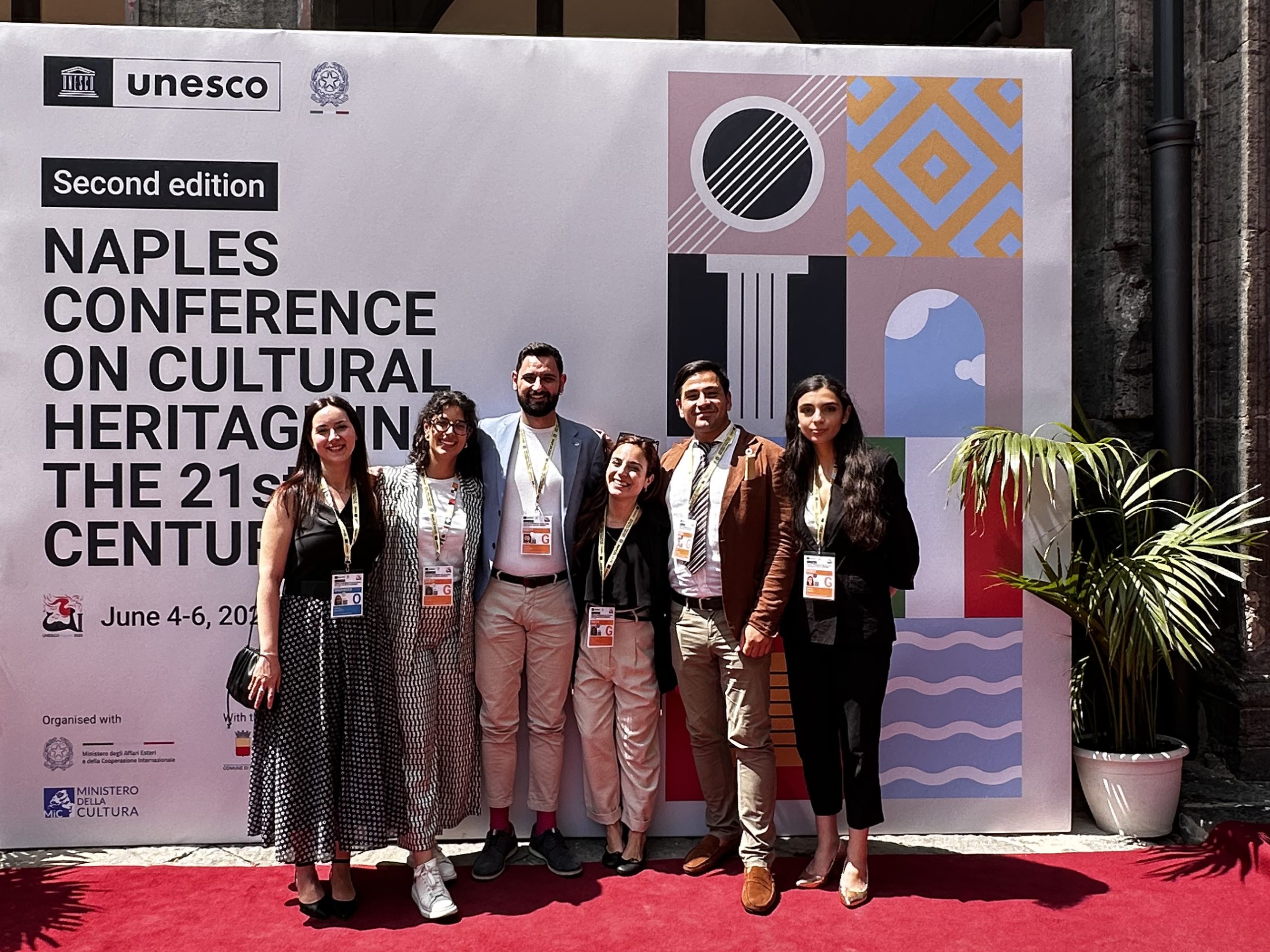
On the occasion of the Conference, the President of AIGU Gianluca Buoncore met the Director-General of UNESCO Audrey Azoulay, a meeting in which the Director-General expressed great appreciation for the work carried out by AIGU over the years, with the President confirming the Association’s commitment to its mission of bringing UNESCO values to young people.
Our thanks go to the organisation and to the institutions that enabled us to be present, in particular to the Ministry of Foreign Affairs and International Cooperation, to the Italian National Commission for UNESCO and to Ambassador Liborio Stellino, Permanent Delegation of Italy to UNESCO.