
Manfredonia, an Apulian town in the province of Foggia, holds in its roots the value of work, ingenuity and craftsmanship.
Through the voices of its inhabitants and the traces still visible in its alleys, shipyards and countryside, stories re-emerge of men and women who built the community’s identity with their own hands.
In this context, the Italian Youth Association for UNESCO has taken on an active and decisive role in promoting the intangible cultural heritage linked to the traditional trades of Manfredonia.
AIGU promoted and coordinated research in the area, involving local witnesses, gathering documentation and publicly sharing this knowledge as part of the event “Hereditas – Antiche Arti e Mestieri 2025”.
Through this initiative, AIGU has turned its objectives into concrete action: safeguarding and promoting tangible and intangible heritage, spreading cultural awareness, and fostering the active involvement of young people in the knowledge and transmission of the identity assets of local communities.
From 7 to 9 November, in the evocative Cloister of Palazzo San Domenico, the folk arts and historic trades that shaped the identity of the area take centre stage once again through demonstrations, exhibitions, workshops and storytelling.
Accompanying the journey are the postcards created by AIGU, which capture the memory of these trades in images and words, becoming small tools of knowledge and cultural transmission.
The project has been carried out thanks to the collaboration with the Pro Loco of Manfredonia, promoter of the event, and with the partners Università degli Studi di Foggia, Touring Club Italiano (Club di Territorio di Foggia), ArcheoSipontum, ANFFAS Manfredonia, Parrocchia Santa Maria Regina, the AGESCI group, as well as the invaluable contribution of the citizens who still preserve the memory of the trades of the past. Thanks to their support, authentic testimonies, images and materials were collected that tell of an ancient knowledge, handed down from generation to generation, made of hard work, creativity and a sense of community.
These trades do not belong solely to the past: they represent a living legacy, part of a shared journey of memory, cultural responsibility and the regeneration of identity.
Below we present the heritage collection, with images and stories of the traditional trades of Manfredonia.
U mastre carrire / The master shipwright
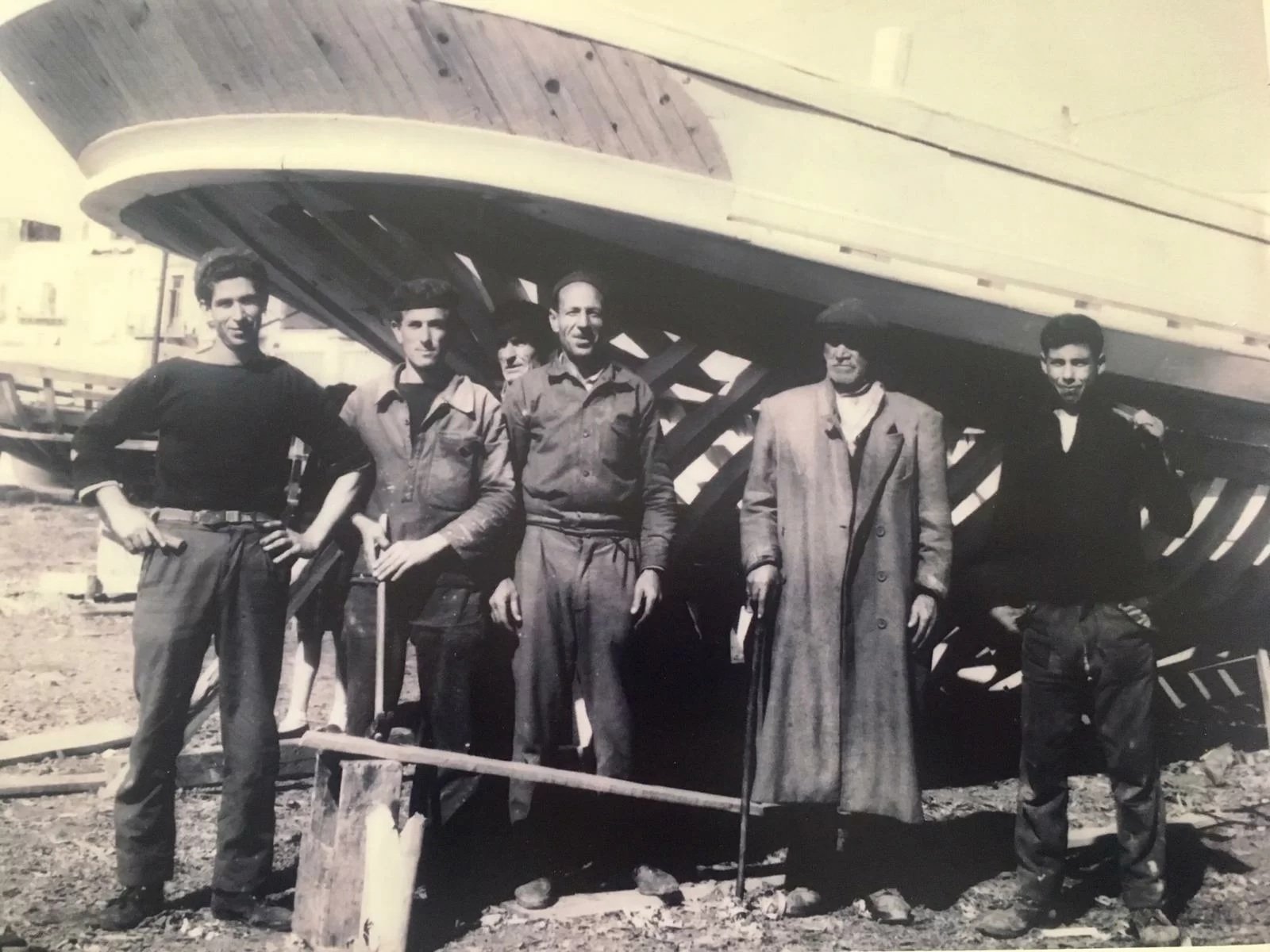
A craftsman specialised in the construction, repair and maintenance of wooden boats. He is a traditional figure, linked above all to seafaring and to artisan shipyards. A multifaceted profession: designer, naval engineer, carpenter, joiner and, at the same time, artist. Thanks to his deep knowledge of the different types of wood and their working characteristics, he knew precisely how to choose the most suitable material for every part of the vessel — from the frames to the floor timbers, from the beams to the planking. The term maestro d’ascia (master of the axe) derives precisely from the tool that symbolises his trade, the axe, an implement with its blade set perpendicular to the handle, with which the wooden planking was bent to fit the keel, then joined and sealed with pegs and pitch. Today many of those operations are carried out with modern machinery. Despite technological progress, in the shipyards of the port wood is still used today as the main material for building fine vessels. The trade takes on two different forms depending on whether he builds carts (Carradore) or boats (Calfaténe). It is an ancient trade, handed down from generation to generation, which over the centuries has been a source of great wealth and prosperity for the town of Manfredonia. Many shipyards operated in the past: the Rucher shipyard of the Rucher master shipwrights, the Fortunato shipyard of master shipwright Teodoro Fortunato, the Castigliego e Guerra shipyard and my own shipyard of the Berardinetti master shipwrights. As a fitting tribute to this ancient and prestigious profession that has marked the town’s history, the area in front of Largo Diomede has been named Piazzale Maestri d’Ascia.
U marenère / The fisherman
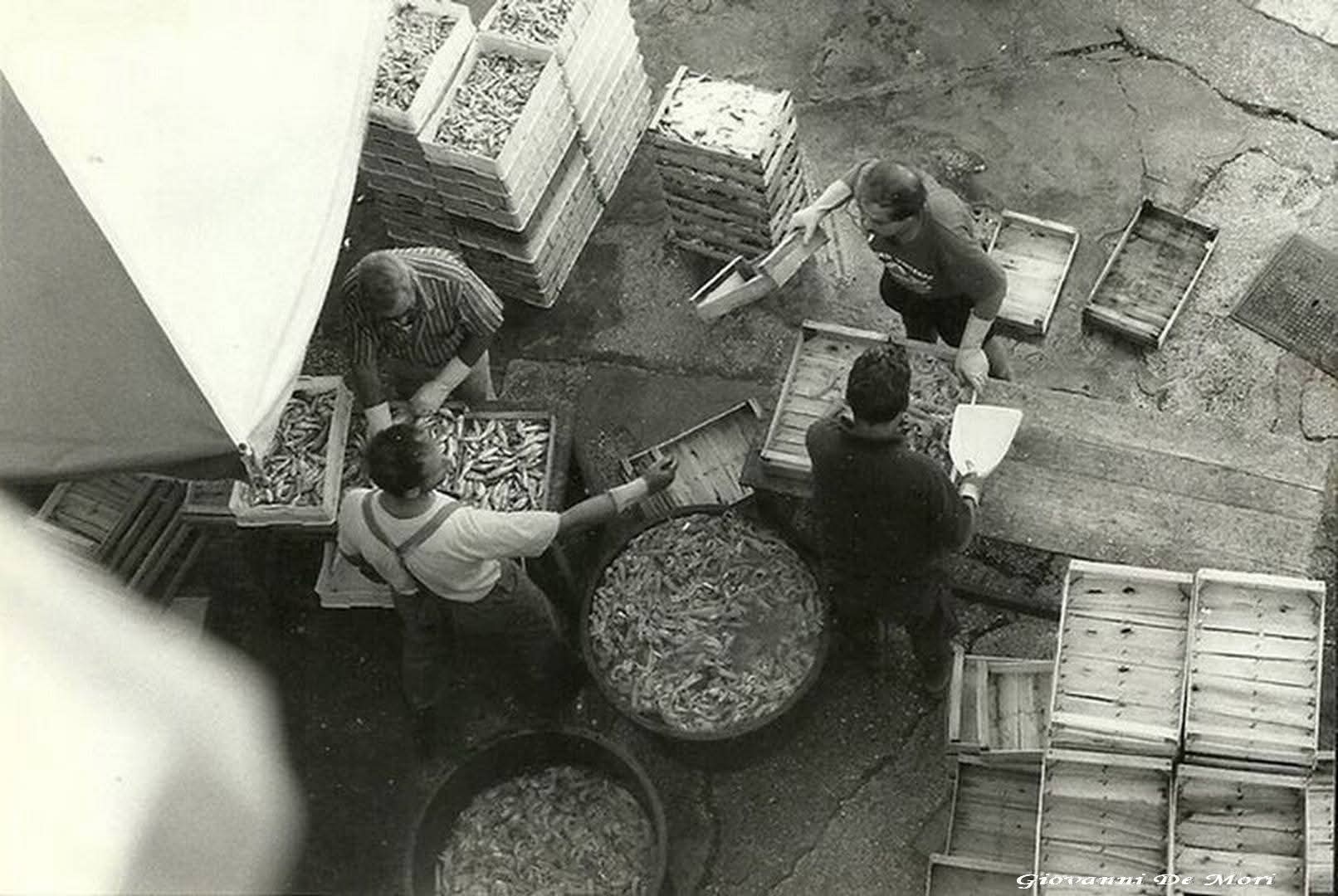
He devoted himself to fishing, drawing from the sea the livelihood needed for himself and his family.
It is a very ancient trade, handed down from father to son, which has always demanded commitment, courage and sacrifice, since the sea, while an essential resource for the town, is also unpredictable and full of dangers. He lived mostly at sea: he would set out on Sunday and return on Friday.
Fishermen also possessed craft skills: they made sails and nets, mended them when they tore, painted their own boats and rigged them, fitting them out for navigation.
The seamen who worked on the boats and at the end of the day were paid in money and with a certain quantity of fish were instead called “Skafette”.
Among the tools used:
– the “sciabica”, a net for shore fishing, cast into the sea and hauled in by hand, with the “pastòra”, a leather band tied across the body to give strength; this is linked to a type of fishing called “u tónne”, that is, “the round”, since a small boat sets off from a point on the beach paying out a long fishing net and, after following a semicircular course, comes back in a few dozen metres from its starting point.
– the “màppele” refers to a part of the net, namely the central body with tighter meshes, connected to the selvedge, that is, the upper part, the one joined to the line with the floats, and to the bottom part, the one attached to the line with the lead weights. Joined together in this way — màppele, sóreve and chjómme (net, corks and leads) — the net is said to be arméte = armed, that is, complete, ready for fishing.
Selling took place at the fish market, where the auctioneer set the price and “u jaddechère” sold the fish retail, in small shops or on the street.
U Cavamonte / The quarryman
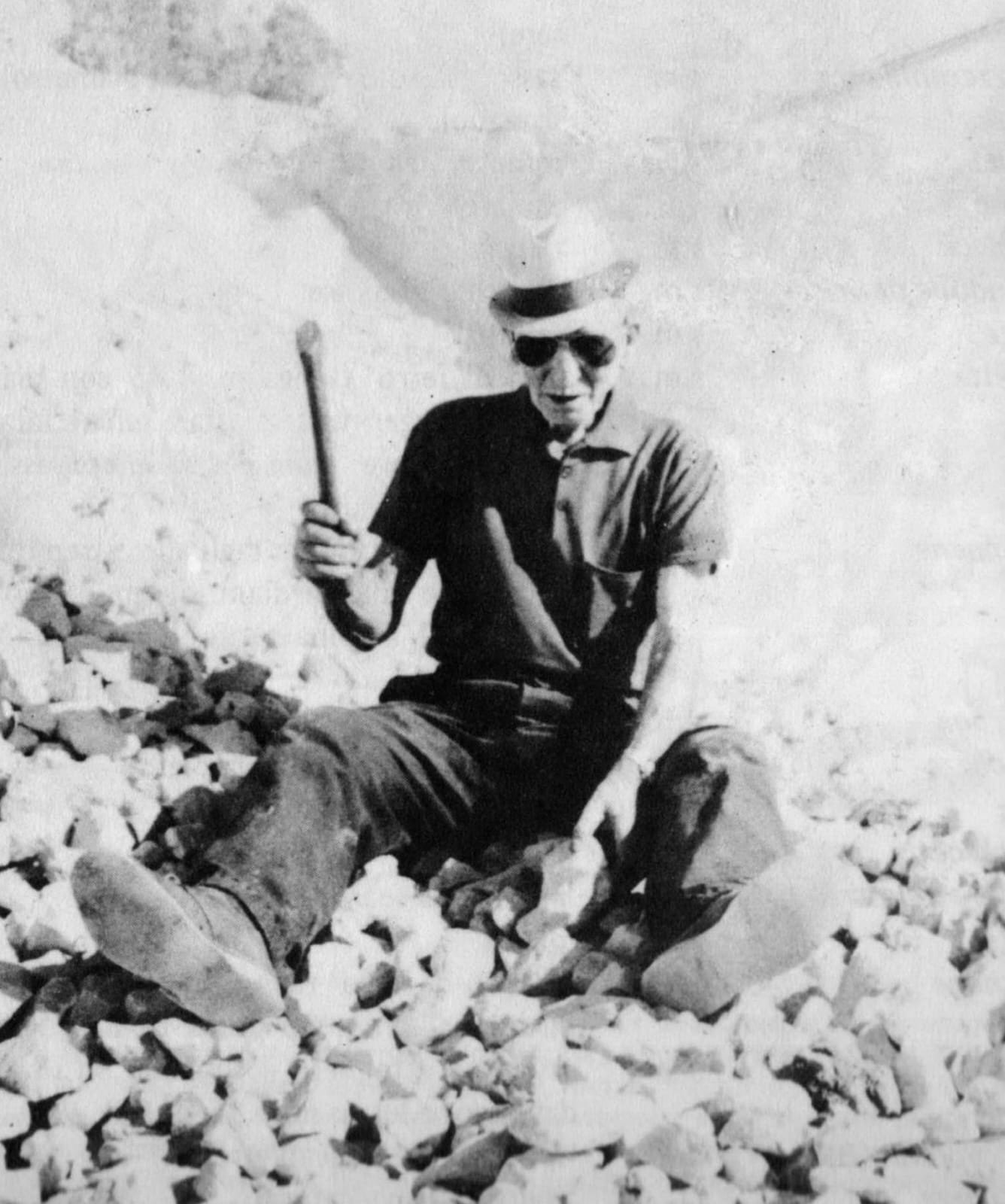
A labourer who extracted stone from a quarry. The stone was used for building houses, roads and marble slabs. It was hard, heavy work, made of dust and noise, with hammer and chisel always in hand. With a steel bar (‘a pala-möne, the mining bar) about 5 cm in diameter, by sheer strength of arm he would bore a hole in the rock at least 50 cm deep.
A ricamatrëce / The embroiderer
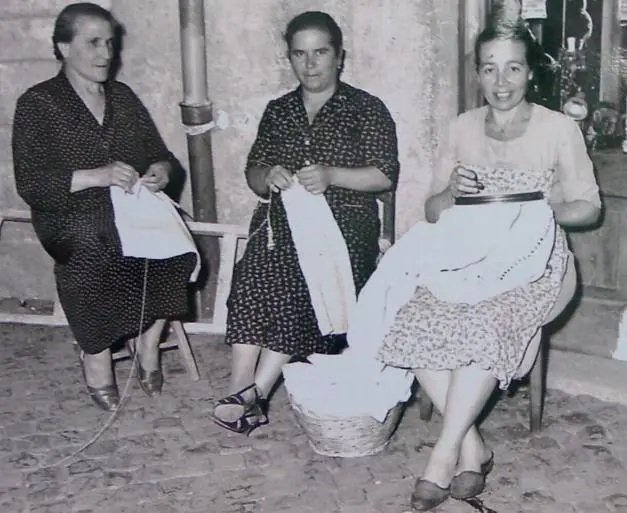
The embroiderer devoted herself to the art of embroidery and taught it to the girls of the town. Young women, especially those tied to the old traditions, prepared their own wedding trousseau by hand, learning from these expert craftswomen. The number of pieces in the trousseau indicated the wealth of the bride and her family. Lessons were held mainly in summer, in front of the houses, where the women worked while singing religious songs. The embroiderer wore simple, comfortable clothes, such as a petticoat and a white apron. She was a patient, hard-working and highly creative person, but her work, carried out for many hours, often ruined her eyesight. Besides embroidery, she also knew how to crochet. In 1592, Isabella de Florio opened a sewing and embroidery school in her home, where the daughters of the nobles and the wealthy of Manfredonia came to learn this art. The manual work required correct posture and a suitable working height to avoid back pain. When she found an interesting design, the embroiderer would copy it onto tissue paper and then transform it into splendid embroidery. Another prestigious school was that of the Orphanage of the Stella Maris sisters. Alongside moral and spiritual formation, girls were taught the art of handling embroidery tools and of executing appliqué embroidery, drawn-thread work, stem stitch, broderie anglaise, satin stitch, flat stitch, filling stitch, cross stitch, chain stitch, laid stitch, hemstitching, quilting, close stitch, bobbin lace and so on. There were also numerous private schools.
U cusitore / The tailor
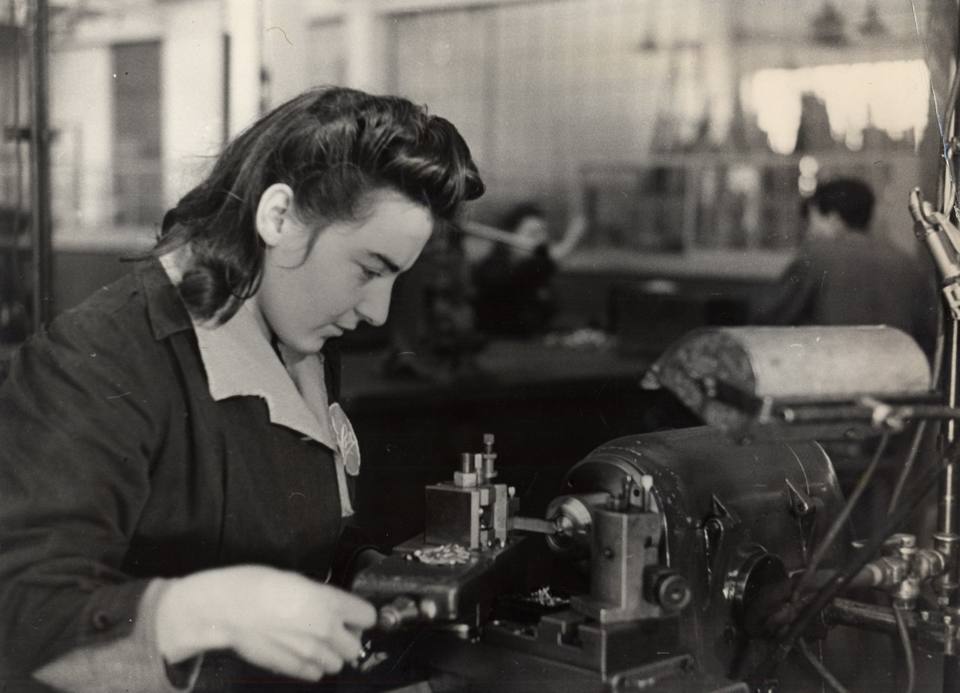
He carried out a variety of tasks: he sewed with patience, prepared patterns with precision, mended damaged garments and, when needed, made new clothes, mainly for men, tending to every detail with dedication and taste. It was a trade of precision and dedication, often practised in a place where home and workplace coincided (house and workshop). It was not a particularly well-paid job, so tailors often supplemented their income with secondary work. From this condition of poverty that often characterised the tailor, similar to that of another craftsman, the cobbler, comes the saying “ U sarte cu vestite strazzéte e u scarpére chi scarpe ròtte”, that is, “The tailor with the torn suit and the cobbler with the broken shoes”. Among his tools: “U Centìmetre”, the tailor’s tape measure, a strip of waxed cloth 2 cm wide and a metre and a half long.
U Scarpère / The cobbler
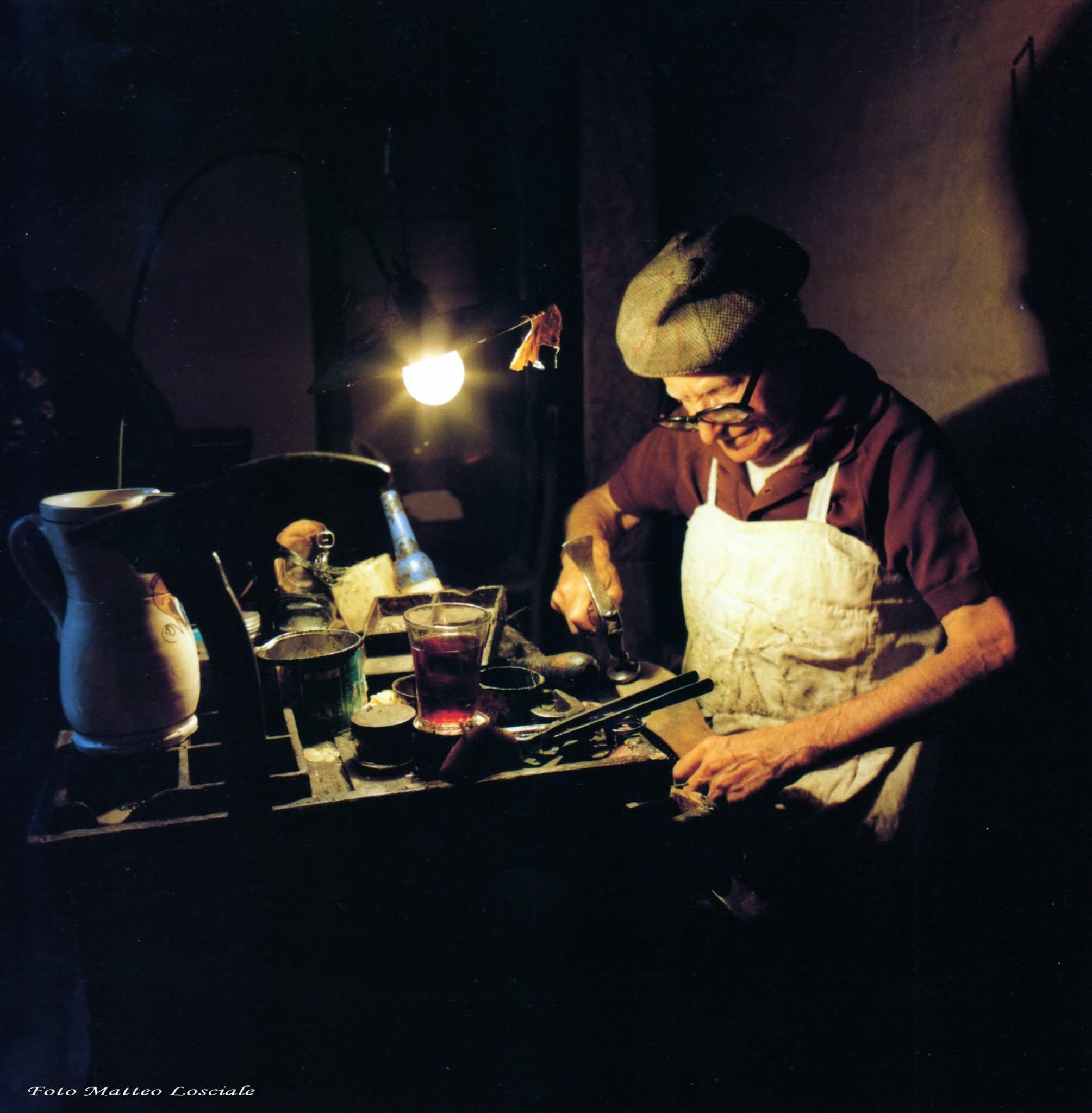
He repaired shoes with great skill: he fixed the stitching, replaced worn heels and carefully resewed damaged soles. The work required ability, attention and a good knowledge of materials. In most cases only the half sole was replaced — the part running from the toe to the ball of the foot — made of tough animal leather, cut and shaped by hand to fit the shape of the shoe perfectly. Each repair gave footwear new life, extending its use and keeping alive an ancient art made of precise gestures and experience handed down over time.
U Cuntadine / The peasant / farmer
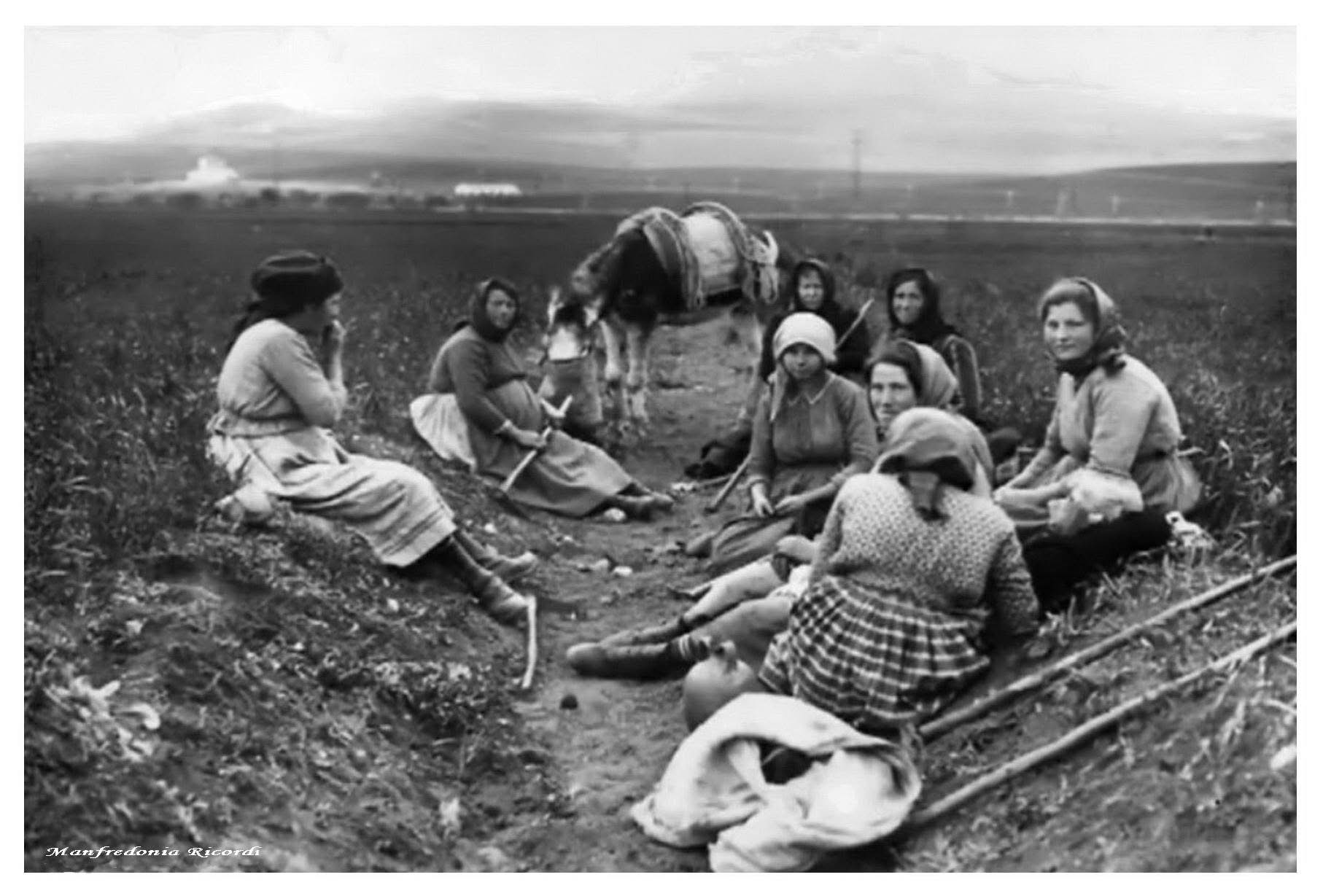
The “cuntadine” worked the land on behalf of others, while the farmer was the owner. The term “Caföne” is used to describe someone coarse and ignorant. It should be remembered that peasants began working at a very young age, and so had no time for schooling. He ploughed the fields with patience and strength, preparing them for the sowing that followed with gestures by now familiar and precise. He scattered the seeds with care, entrusting them to the earth and the seasons, and when harvest time came, he worked tirelessly to fill the sacks with wheat or the baskets with fruit and vegetables. His pay was not always in money: he often received a share of the harvest itself, the fruit of his effort and daily toil, or a small sum that was the tangible recognition of his work in the fields, as hard as it was essential to everyone’s life. Many families lived in the countryside around the town to work the land. Peasants rose at dawn, often around three in the morning, and during the harvest months there was always plenty to do. In May the wheat harvest began, while in summer came the gathering and cleaning of almonds, in which the women also took part. The last great labour of the year came in September, with the olive harvest.
A Nutrizze / The wet nurse
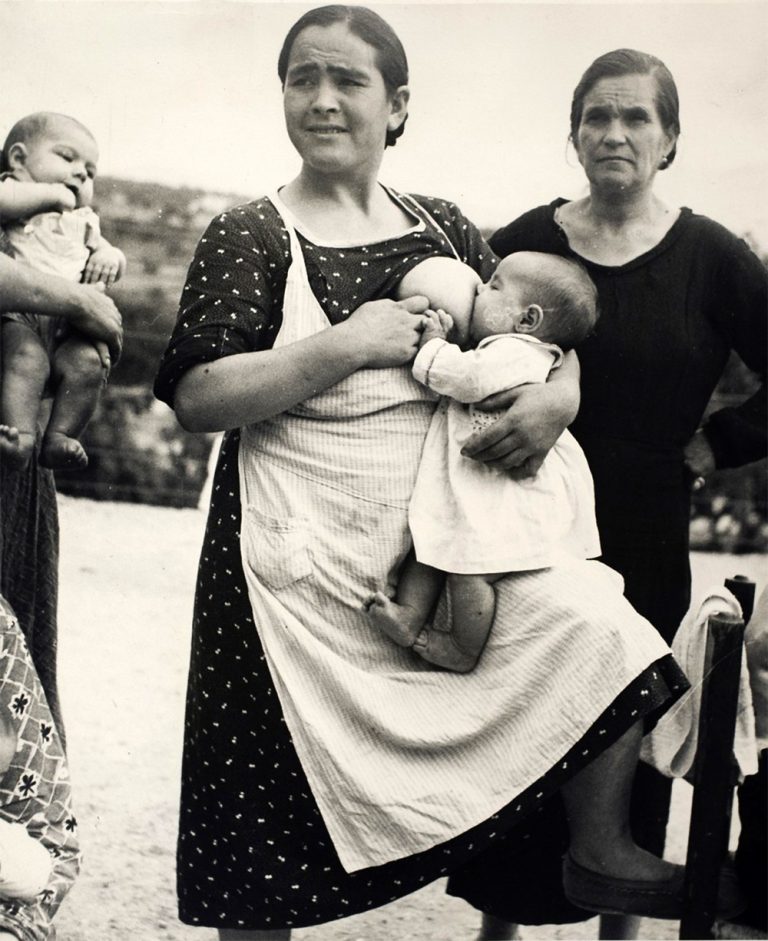
After giving birth, most mothers in Manfredonia breastfed their children themselves. When, however, some women had little milk, they turned to the “bbalie”, also called “mamme de latte” or “nutrizze”: sturdy women with ample bosoms, able to nourish not only their own children but also those of other mothers. This form of solidarity, which lasted for months, created a deep bond between the two women, called “a cumbarizzje”, based on respect and friendship. Infants nursed by the same wet nurse were considered “fréte de latte”, that is, milk brothers, united by a special bond of affection despite not being related by blood. Among the best-known wet nurses of the last century were the sisters Siponta and Antonietta Miucci, nicknamed “i stangùne” for their imposing build.
U firrére / The blacksmith
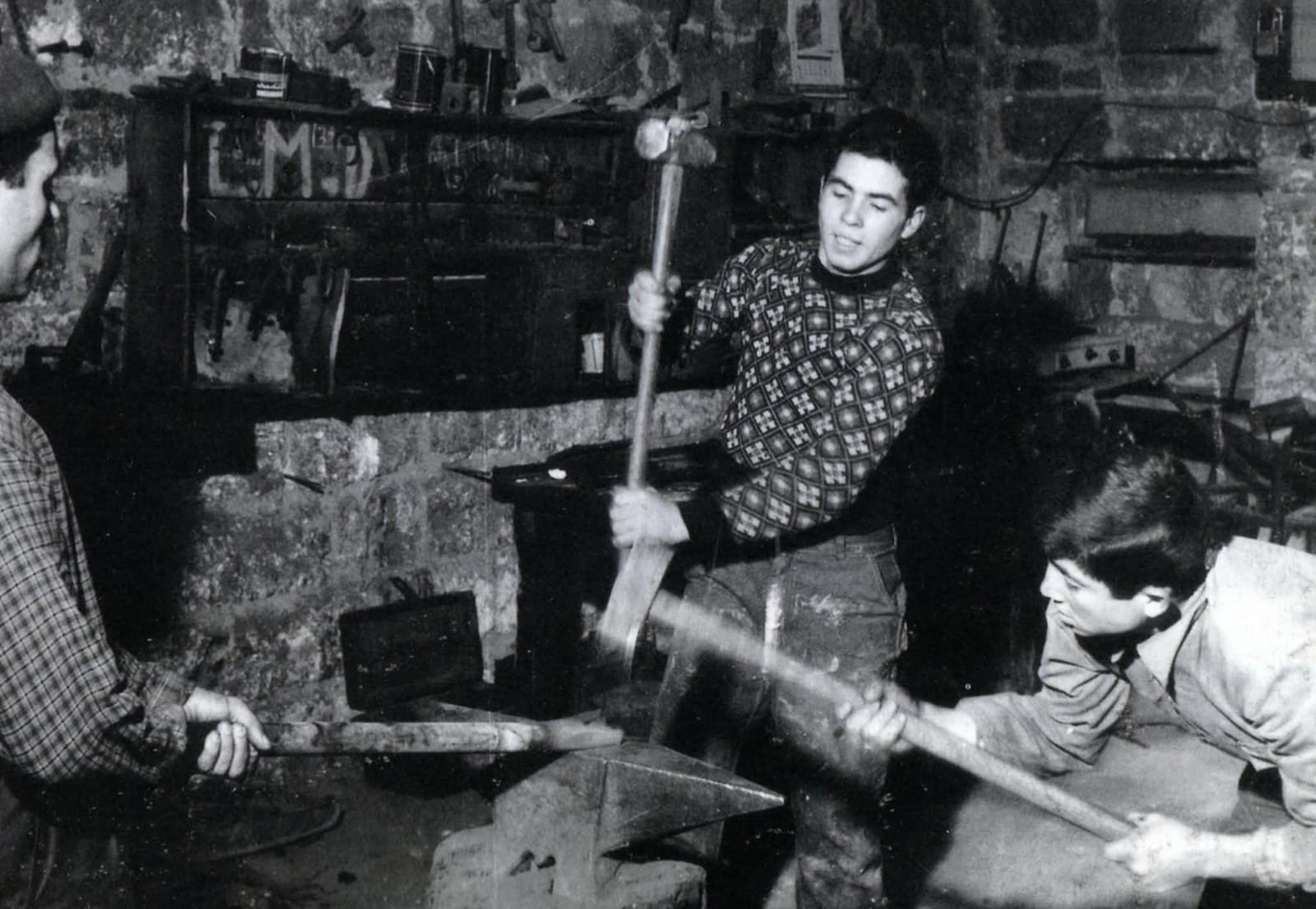
He worked iron with skill and strength, transforming the raw metal into useful and often beautiful objects: railings, gates, handrails or work tools. In his workshop, he heated the iron until it glowed, then shaped it with firm, precise blows, bending it to his will and giving it the desired form. It was a hard and tiring trade, accompanied by the sound of the hammer on the anvil and by a shower of bright sparks that lit up the workshop. But it was also an art, made of experience, patience and great mastery, capable of uniting the force of fire with human creativity.
U Canistrére / The basket weaver
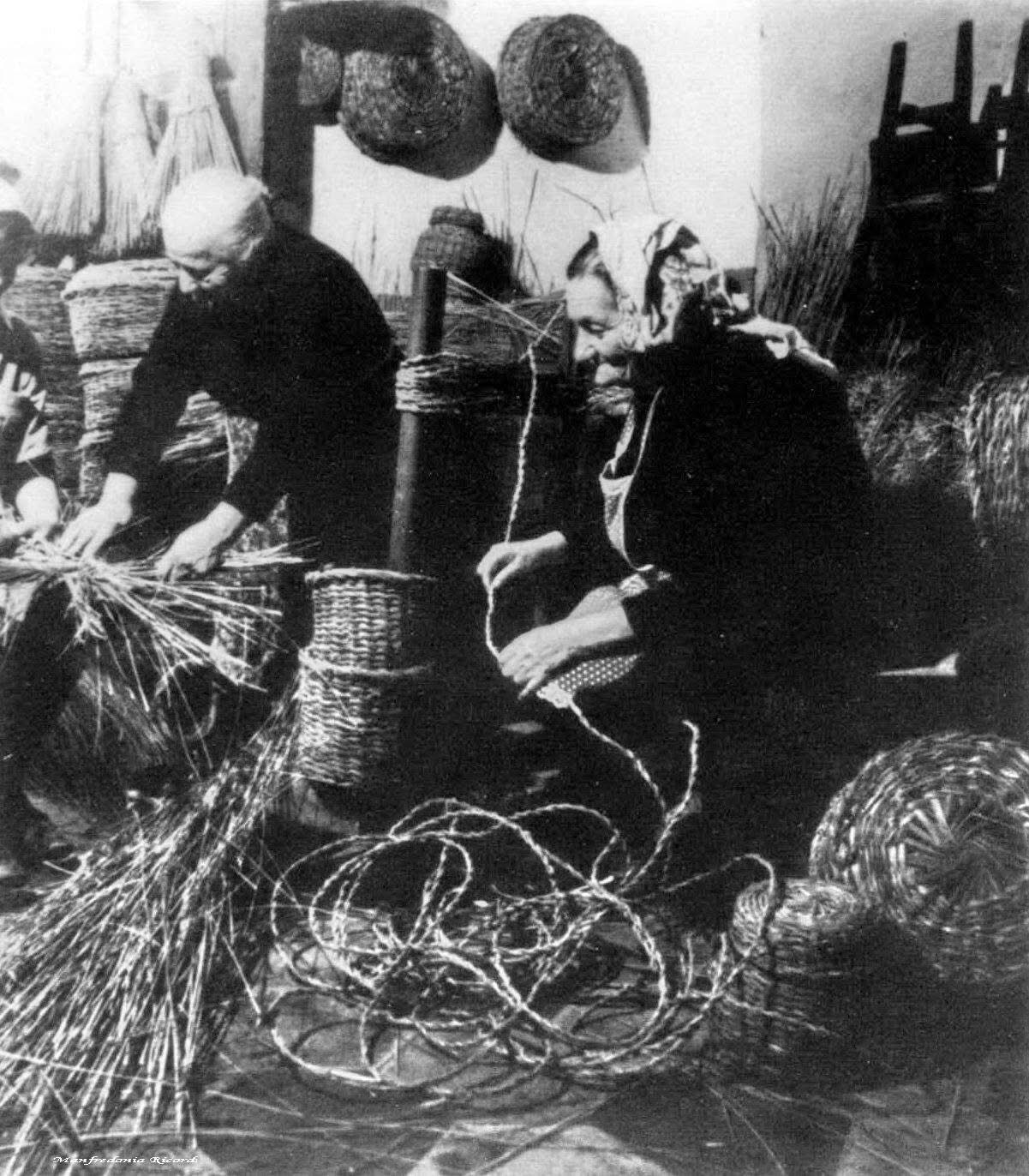
With patience and skill he wove straw or reeds, which were first carefully soaked to make them flexible and then left to dry in the sun. With these he made the so-called “canistre”, baskets of various shapes and sizes, each designed for a specific use. Some were small and light, ideal for gathering fruit or vegetables; others were sturdier, suited to holding the day’s catch or the frogs caught in the canals and marshes. This apparently simple work in fact required great mastery and knowledge of natural materials. The “canistre” were indispensable objects in the daily life of the wetland and rural areas, symbols of an economy built on manual skill, ingenuity and a close bond with nature.